
White dust from a humidifier is usually mineral residue from the water, especially when an ultrasonic humidifier is filled with mineral-rich tap water. The device turns water into very fine droplets, and after those droplets evaporate, minerals such as calcium and magnesium can settle on nearby surfaces.
You may first notice the powder on a nightstand, office desk, dark furniture, or other surfaces close to the humidifier.
This does not automatically mean the appliance is faulty. Before replacing it, change one variable first: the water. If the residue decreases after switching to low-mineral water, you have a much stronger reason to suspect minerals rather than a mechanical problem.
What Causes Humidifier White Dust?
Most tap water contains naturally occurring dissolved minerals. The amount varies by location, so two households using the same type of humidifier may see very different amounts of residue.
Ultrasonic humidifiers use high-frequency vibrations to create tiny water droplets. Those droplets can carry dissolved minerals into the surrounding air. Once the water evaporates, the minerals remain behind as fine powder.
That is why humidifier white dust tends to be more noticeable in areas with hard water.
Mineral scale inside the tank can provide another clue. Crusty deposits on internal surfaces suggest that the water contains a significant mineral load, although scale inside the humidifier and powder on furniture are not exactly the same thing.
The U.S. Environmental Protection Agency explains that ultrasonic humidifiers can disperse minerals from their water tanks into indoor air. Its guidance also recommends using water with low mineral content and maintaining portable humidifiers regularly. See the EPA’s Use and Care of Home Humidifiers for more detail.
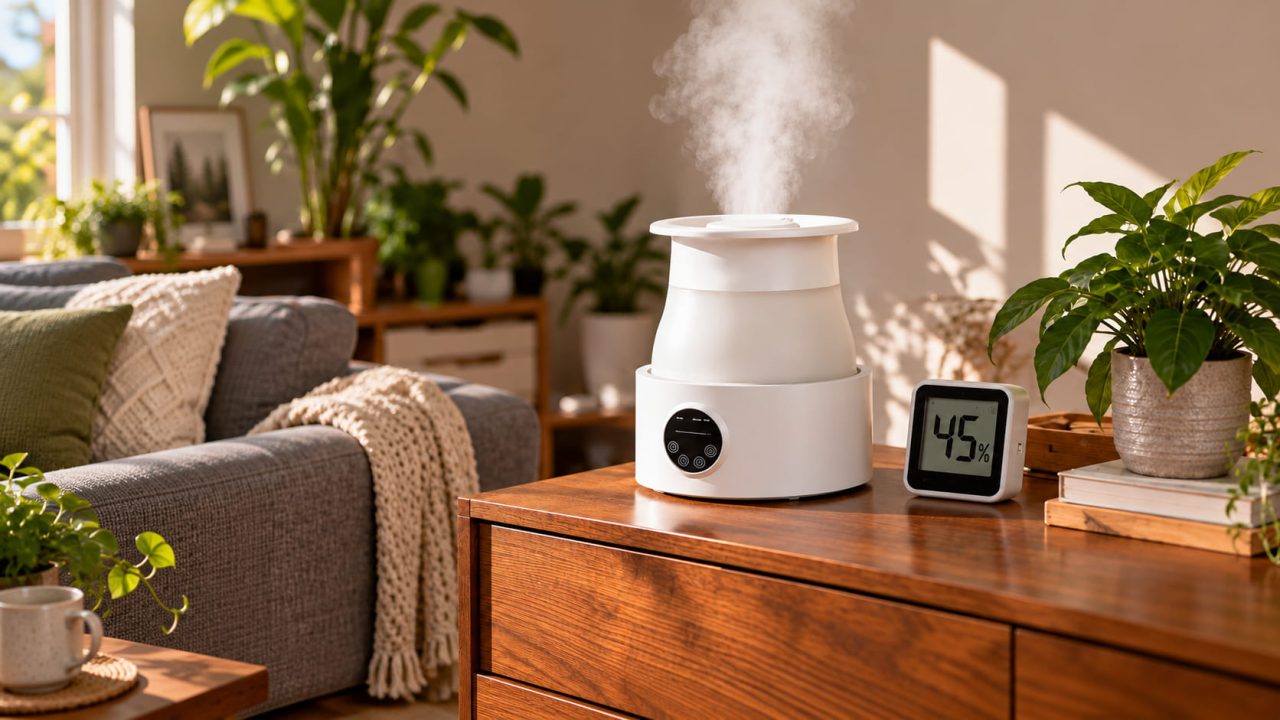
How Can You Tell Whether the Water Is the Main Cause?
Rather than repeatedly wiping away the residue, test the water source.
Start by cleaning the humidifier according to the manufacturer’s instructions so old mineral deposits do not affect the result. Then refill it with distilled water and use the humidifier for several normal sessions without changing the room placement or usual mist setting.
Afterward, compare the surrounding surfaces.
- Much less residue appears: mineral-rich water was probably a major contributor.
- The amount changes only slightly: existing scale or another source of dust may still be involved.
- No meaningful difference appears: check the unit again and consider whether the powder is actually coming from something else nearby.
This is not a laboratory test, but it gives you a practical way to judge whether the white dust from your humidifier is mainly related to water quality.
How to Stop White Dust From a Humidifier
Once mineral-rich water appears to be the cause, the next step is not complicated: reduce the minerals entering the humidifier and remove deposits already inside it.
1. Switch to Distilled or Low-Mineral Water
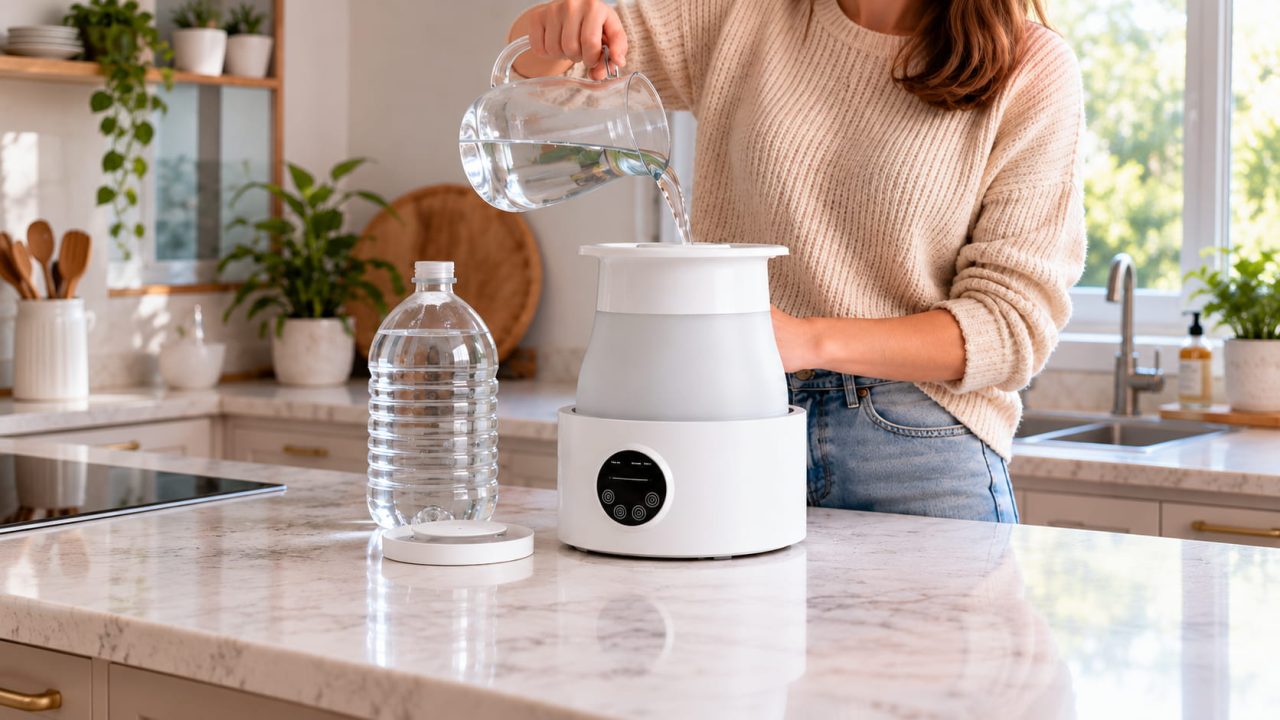
Distilled water generally contains far fewer dissolved minerals than normal tap water. That leaves much less mineral material available to become airborne residue.
Do not assume all bottled water works the same way. Spring water and mineral water may still contain substantial mineral content, while reverse osmosis water can contain considerably less depending on the system.
Use distilled water for several sessions before judging the result. If the powder drops noticeably, the change gives you useful evidence that water mineral content was driving the problem.
2. Remove Existing Mineral Buildup
Changing the water does not remove scale already sitting inside the tank.
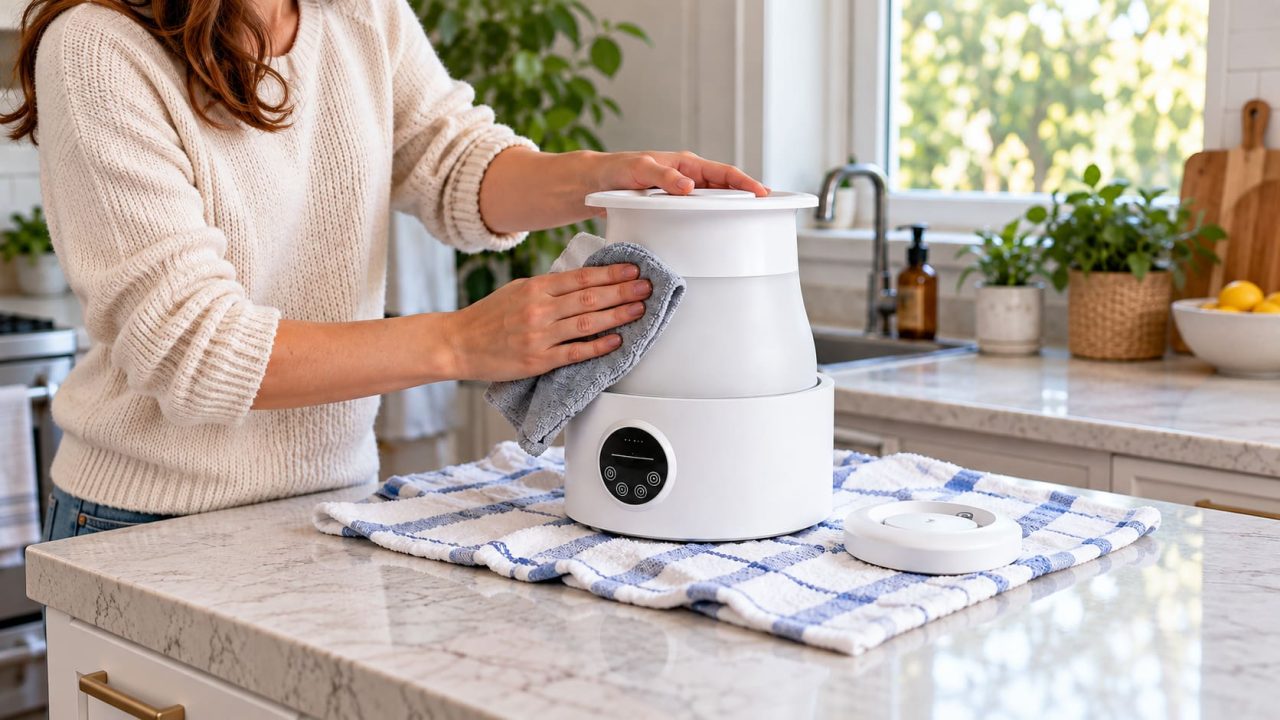
Unplug the humidifier, empty the remaining water, and clean accessible internal surfaces according to the manufacturer’s instructions. Existing deposits should be removed before you decide whether the new water source is working.
This separates two different jobs:
Cleaning removes minerals that are already there.
Low-mineral water reduces the amount added during future use.
Doing only one of those can make it harder to tell whether the problem has actually been solved.
3. Check Any Demineralization Cartridge or Filter
Some humidifiers include a cartridge, cassette, or filter designed to reduce minerals.
If your model has one, check whether it is installed correctly and whether the recommended replacement interval has been reached.
These accessories may reduce minerals, but they do not necessarily remove everything indefinitely. If white residue begins returning after a period of cleaner operation, the condition of the cartridge is worth checking.
Which Water Is Better for Reducing White Dust?
The important difference is not simply whether the water is labeled “filtered.” What matters is how much dissolved mineral remains.
| Water Type | Likelihood of Mineral Residue |
|---|---|
| Tap Water | Depends heavily on local mineral content |
| Standard Filtered Water | May still contain substantial dissolved minerals |
| Reverse Osmosis Water | Usually contains fewer minerals than tap water |
| Distilled Water | Generally the most practical low-mineral option |
A household pitcher filter should not automatically be treated as a demineralization system. Many filters are designed to improve taste or reduce specific contaminants rather than remove most dissolved minerals.
Boiling tap water is also different from distillation. Simply boiling the water does not reliably remove the minerals responsible for humidifier residue.
So if you are trying to work out how to stop white dust from a humidifier, do not just switch from tap water to any random bottled or filtered water. Use a genuinely low-mineral source and compare the result.
Why Can White Dust Return After Cleaning?
Cleaning solves only the buildup that already exists.
Suppose you remove visible scale today but refill the tank tomorrow with the same hard tap water. The source of the minerals has not changed, so new residue can appear again.
A better check is:
Did you clean the humidifier and change the mineral content of the water?
When both changes are made together, it becomes easier to see whether the white powder is actually a water-quality problem.
Do Ultrasonic Humidifiers Create White Dust More Easily?
Ultrasonic models are more closely associated with mineral residue because they release fine water droplets that can carry dissolved minerals into the room.
Evaporative humidifiers work differently, using airflow through a wet wick. Steam humidifiers heat water to produce vapor. These designs generally do not disperse minerals in exactly the same way, although mineral scale can still form inside the appliance.
The WindBillion H50 Humidifier is an ultrasonic model, so water quality is relevant when diagnosing white residue around the unit. If powder appears during normal use, changing to low-mineral water and cleaning existing deposits is a more useful first test than assuming the humidifier needs replacing.
For broader setup and everyday-use ideas, see 7 Practical Ways to Use a Humidifier at Home and in a Reptile Terrarium.
Is Humidifier White Dust Harmful?
White powder is mainly mineral residue, so seeing it does not automatically mean your humidifier is contaminated or malfunctioning.
That does not mean maintenance can be ignored. Water left sitting in a tank can allow microorganisms to grow, while excessive indoor humidity may encourage mold and other moisture-related problems.
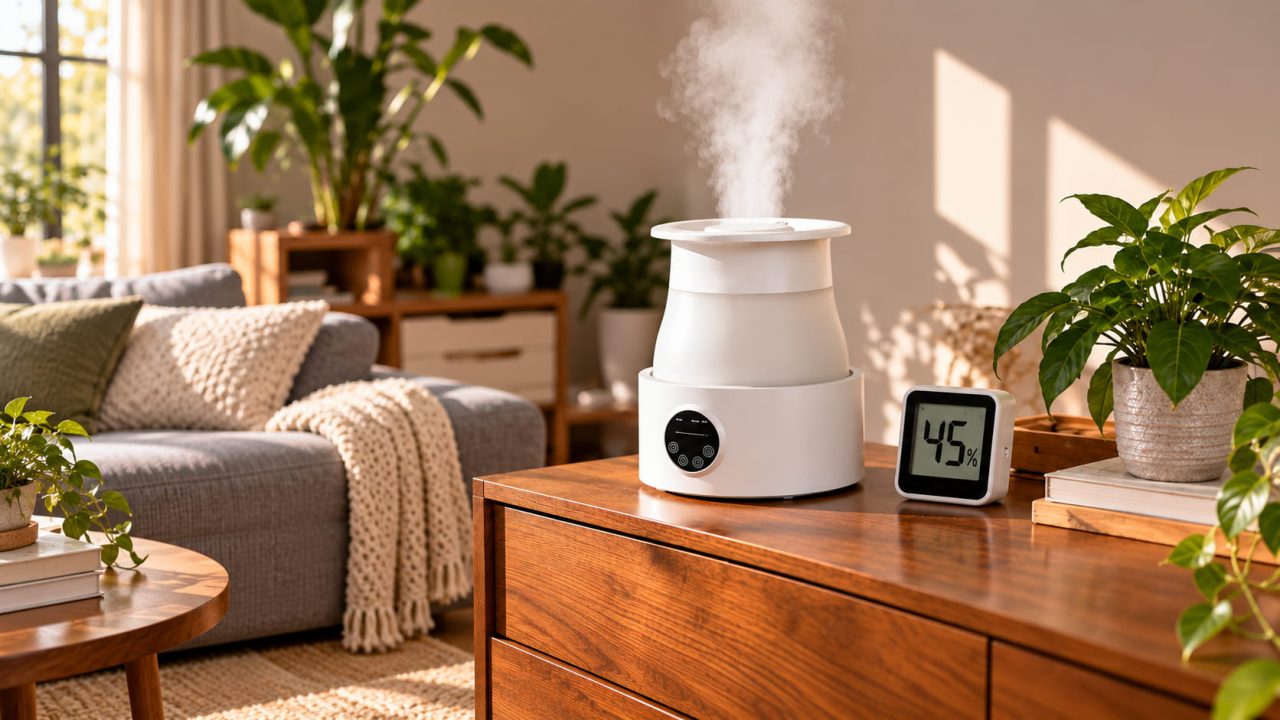
Keep the tank clean, replace standing water regularly, and monitor room humidity if needed. EPA guidance recommends keeping indoor relative humidity at or below 50%.
The appearance of slime, unusual discoloration, strong odors, or visible growth inside the tank points to a different issue than ordinary mineral residue. Respiratory symptoms that seem linked to humidifier use are also a reason to stop using the appliance and seek appropriate medical advice.
What Should You Do First?
If your humidifier leaves white dust, do not begin by replacing it.
Clean the tank, switch to distilled or another suitable low-mineral water, and run the humidifier under the same normal conditions for several sessions.
A clear drop in residue strongly suggests that mineral content in the original water was a major part of the problem.
When the powder continues despite low-mineral water and a clean tank, check any demineralization system, review the instructions for your specific model, and consider whether the residue may be coming from another source.
The useful question is not only why your humidifier leaves white dust.
It is whether the residue changes when you remove minerals from the water entering the humidifier. That gives you something you can actually test.