
·A waist fan for factory floor workers works best when it is clipped securely at the side or slightly front of the waist, with the air outlet left clear so airflow can travel upward beneath workwear. Keep tool belts, aprons, and other equipment away from the outlet, and never change or reposition required PPE just to make room for the fan.
Start with a moderate fan speed and increase it only if the airflow path is clear but still feels insufficient. With the WindBillion WF04, the rotating clip can help adjust airflow direction, while the ice plate is better used for short periods of direct-contact cooling rather than throughout an entire shift.
The goal is simple: safe placement, clear airflow, stable movement, and only as much fan speed as the job requires.
Why Is Cooling on a Factory Floor Different?
Factory-floor heat can come from more than outdoor temperatures.
Production machinery, hot surfaces, limited air circulation, physical activity, and protective clothing can all make a work area feel warmer. Some workers may also move between hotter and cooler parts of the facility during the same shift.
Movement creates another challenge.
A portable waist fan that sits correctly while someone is standing still may shift during walking, bending, lifting, or reaching. Clothing can fall over the outlet, while a belt or tool pouch may press against the housing.
That means fan performance depends on more than maximum wind speed.
The more useful question is:
Can the airflow remain clear and stable while you are actually working?
Before choosing where to attach the fan, however, workplace safety requirements need to come first.
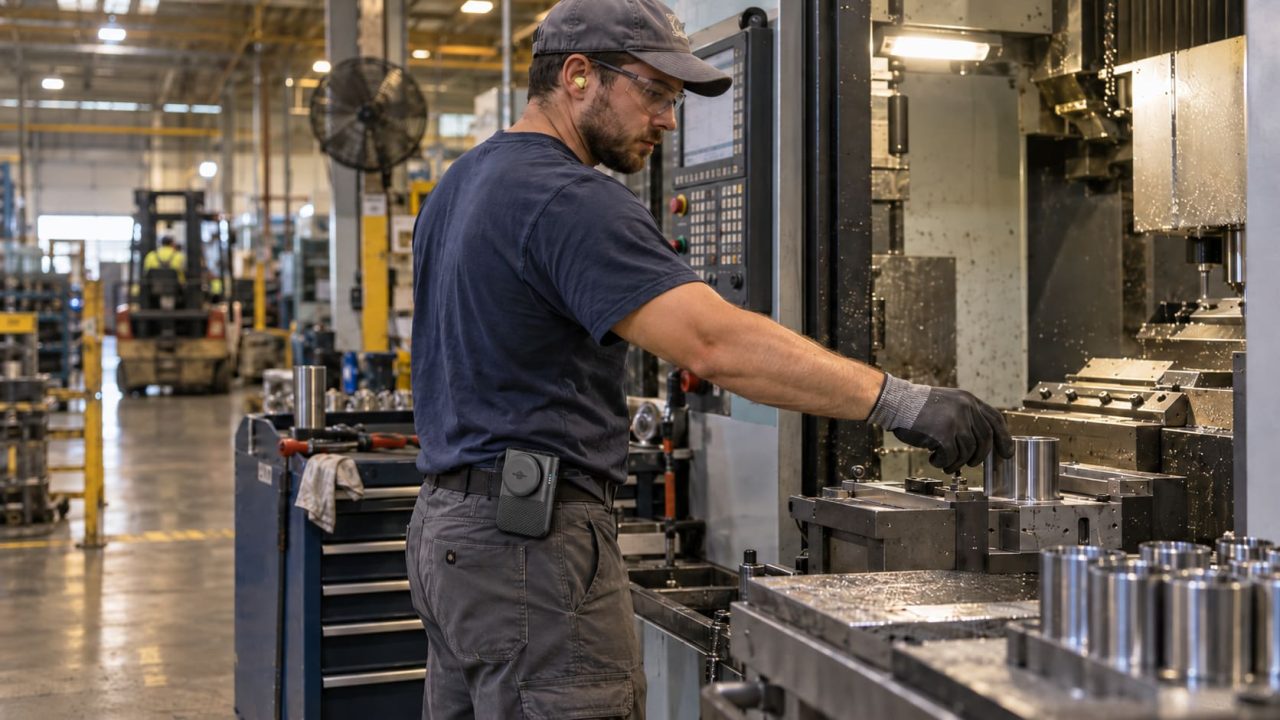
What Should You Know About PPE and Work Equipment?
Required PPE should never be changed to make room for a personal cooling device.
If a fan interferes with a safety harness, respirator, protective apron, fall-protection equipment, or another required item, the protective equipment takes priority.
Tool belts can create similar conflicts.
A pouch sitting directly above the fan may block the outlet, while a wide belt can affect how securely the clip attaches. An apron may also fall over the fan once the worker begins moving.
Some production areas may restrict wearable electronics or personal accessories because of machinery, contamination, ignition hazards, or other site-specific requirements.
Before using a belt fan on the factory floor, confirm that personal devices are permitted and that the fan does not interfere with required equipment.
OSHA’s Heat Exposure guidance also emphasizes measures such as engineering controls, work practices, hydration, rest, acclimatization, and appropriate PPE management.
Personal airflow can support comfort, but it does not replace workplace heat controls.
Once the fan is permitted and does not conflict with required equipment, the next step is finding a position that keeps the airflow clear.
How Should You Position a Waist Fan for Factory Floor Workers?
There is no single mounting position that works for everyone.
Body shape, clothing, belts, tools, and normal job movement all affect where the fan can sit comfortably.
A side or slightly front-side waist position can be a practical starting point because it allows air to travel upward while keeping the device away from the center of the body.
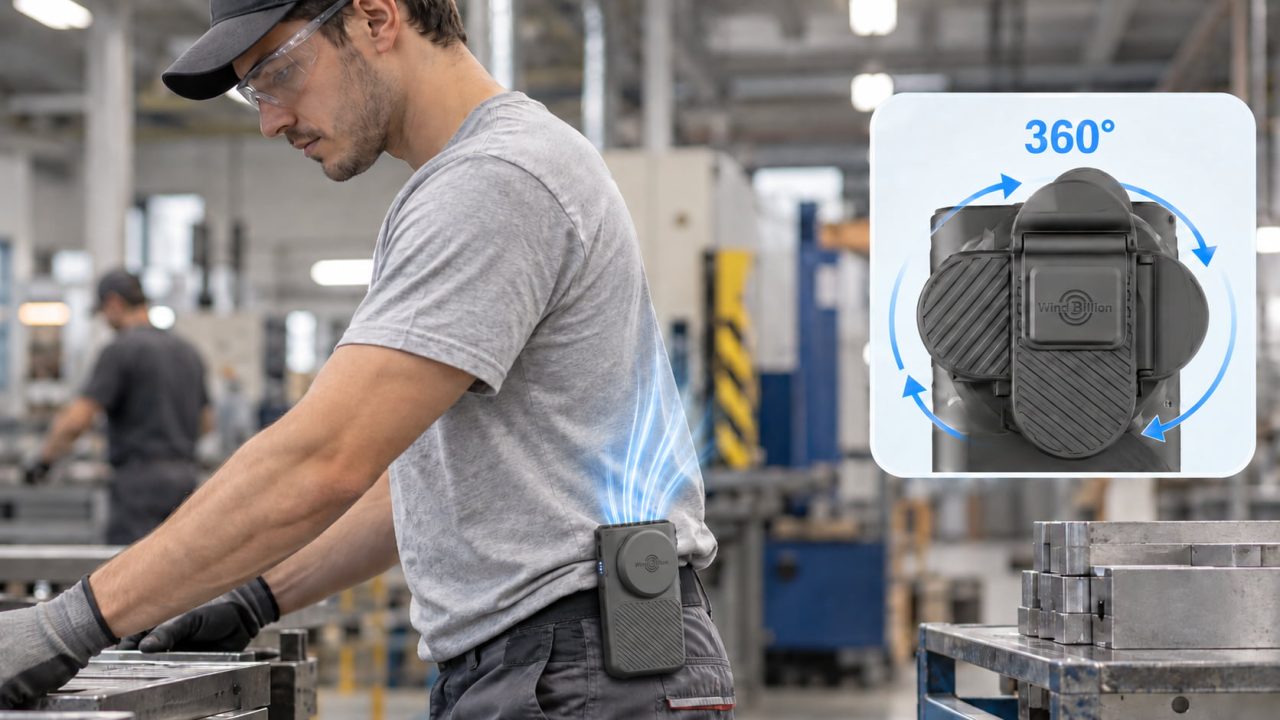
The WindBillionWaist Fan 04 uses a 360° rotating rear clip, allowing the airflow direction to be adjusted when the fan is attached to a waistband, belt, pocket, or another suitable point.
The best position is not simply the one that feels comfortable when the fan is first attached. It should also remain stable once normal work movement begins.
Keep the Airflow Path Clear
WF04 directs airflow upward from its top outlet.
Looser clothing can leave space for the air to travel beneath the shirt, while tighter workwear may press against the outlet and restrict airflow.
Aprons, jacket hems, and tool pouches can cause the same problem.
If the airflow suddenly feels weak, do not immediately assume the fan needs a higher setting.
First check whether something is covering the outlet.
A useful rule is:
Clear the airflow path first, then decide how much fan speed you need.
Test the Position While Moving
Do not test the fan only while standing still.
Wear the same type of work clothes and permitted equipment used during the actual shift. Then walk, bend, turn, and reach as you normally would.
Check whether the clip changes position or clothing begins covering the outlet.
If the housing starts rubbing against tools, or the airflow disappears each time you move, adjust the mounting point.
A portable waist clip fan is more practical when it stays stable without needing repeated adjustments during work.
How Should You Balance Airflow and WF04 Ice Plate Cooling?
A waist fan does not need to operate at maximum speed throughout an entire shift.
Cooling needs can change depending on workload and location. More active work or a hotter production area may require stronger airflow, while a lower setting may be enough during lighter tasks or rest periods.
WF04 provides four fan speeds with published airflow ranging from 3.8 m/s to 7.9 m/s.
Its built-in 5,000mAh rechargeable battery provides up to 34 hours of fan-only runtime on the lowest setting.
These figures describe different operating conditions. Maximum airflow does not mean maximum runtime at the same time.
Use Only as Much Fan Speed as You Need
For a rechargeable waist fan used over a long work period, matching the speed to the situation is usually more practical than leaving it at maximum output.
If the airflow already reaches the body effectively, increasing the speed further may simply use battery power faster.
When cooling feels weaker than expected, check the clothing and fan position before changing the setting.
This is also why battery capacity alone does not tell you how long a fan will run in every situation. Our guide to portable fan battery life explains how speed and active functions affect runtime.
Use the Ice Plate for Short-Duration Cooling
WF04 also includes a front ice plate for direct-contact cooling.
This function serves a different purpose from the airflow coming from the fan.
The ice plate works only while the fan is running. When cooling is active, WF04 operates with fan Speed 1 or Speed 2, and the cooling function automatically switches off after about 10 minutes of continuous use.
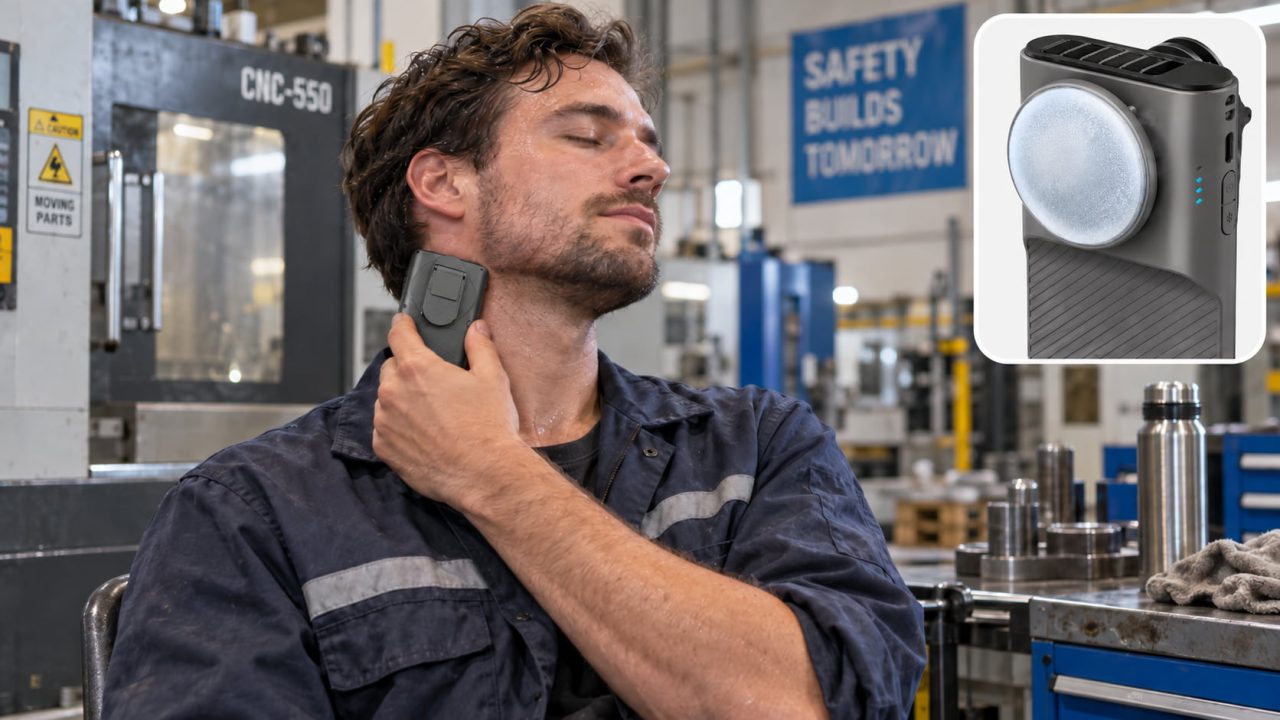
That makes it more suitable for short periods of targeted cooling than for continuous use throughout an entire shift.
Airflow remains the main ongoing cooling function, while the ice plate can provide additional direct-contact cooling when the work situation and clothing allow it.
Clear Airflow Comes Before More Fan Speed
A waist fan for factory floor workers works best when its position supports both cooling and safe movement.
Start by confirming that the fan is permitted in the work area and does not interfere with required PPE. Choose a stable attachment point, keep clothing and equipment away from the outlet, and test the setup while moving normally.
Only after the airflow path is clear should you decide how much fan speed is necessary.
WF04’s rotating clip can help adjust airflow direction, while the ice plate provides an additional short-duration cooling option when appropriate.
The practical order is:
workplace safety → stable placement → clear airflow → normal movement → suitable speed → additional cooling when needed
A portable waist fan can make a hot shift more comfortable, but the most effective setup begins with clear airflow and safe placement rather than simply choosing the highest speed.