
If your space heater keeps turning off, it does not always mean the heater is broken. Overheating, blocked airflow, thermostat cycling, a tip-over safety switch, an unstable power connection, or an internal fault can all cause unexpected shut-offs.
Before troubleshooting, check whether a timer or automatic shut-off has been enabled. If the heater stops at a predictable time or after reaching a set temperature, it may simply be operating as designed.
Unexpected repeated shut-offs are different. If the heater stops within a few minutes, becomes excessively hot, smells unusual, or trips the circuit, investigate the cause rather than repeatedly turning it back on.
Why Does My Space Heater Keep Turning Off?
A space heater may shut off because a normal control or safety feature is doing its job, or because something is preventing the heater from operating normally.
Timers, temperature controls, overheat protection, and tip-over switches can intentionally stop a heater. This is different from random shutdowns with no clear trigger.
Look for a pattern first.
Notice whether the heater stops after roughly the same amount of time. If it begins running again after the room cools, the shut-off may be related to normal temperature control. A unit that stops only after becoming unusually hot points to a different issue and deserves closer attention.
If there is no obvious normal explanation, work through the following six checks.
What Are the 6 Things to Check?
If you are asking “Why does my space heater keep turning off?”, start with the simplest and safest checks first. Once you have ruled out an obvious timer or normal temperature cycle, the six points below can help you narrow down the cause—from overheating and blocked airflow to power issues or a possible internal fault.
You do not need to open the heater or bypass any safety feature. The goal is to identify whether the shut-off is caused by normal protection, an external condition, or a possible internal fault.
1. Check the Overheat Protection
A heater with overheat protection is designed to stop operating if its internal temperature becomes too high. This is a safety response and should never be bypassed.
If the heater shuts off after becoming very hot, turn it off and allow it to cool. Check that the surrounding area is not too enclosed and that the heater has enough space for normal ventilation.
Repeated overheating after obvious airflow problems have been removed may indicate that the heater needs further inspection rather than another reset.
2. Check Whether the Air Vents Are Blocked
Restricted airflow can cause heat to build up inside a heater and trigger protective shut-off.
Look around the intake and outlet for dust buildup, curtains, bedding, clothing, furniture, or other objects that may be too close.
The goal is simply to keep the airflow path clear. Basic troubleshooting should not require opening the heater or reaching into internal components.
If clearing an obstruction stops the repeated shut-offs, restricted airflow may have been causing excess heat inside the unit.
3. Check the Tip-Over Safety Switch
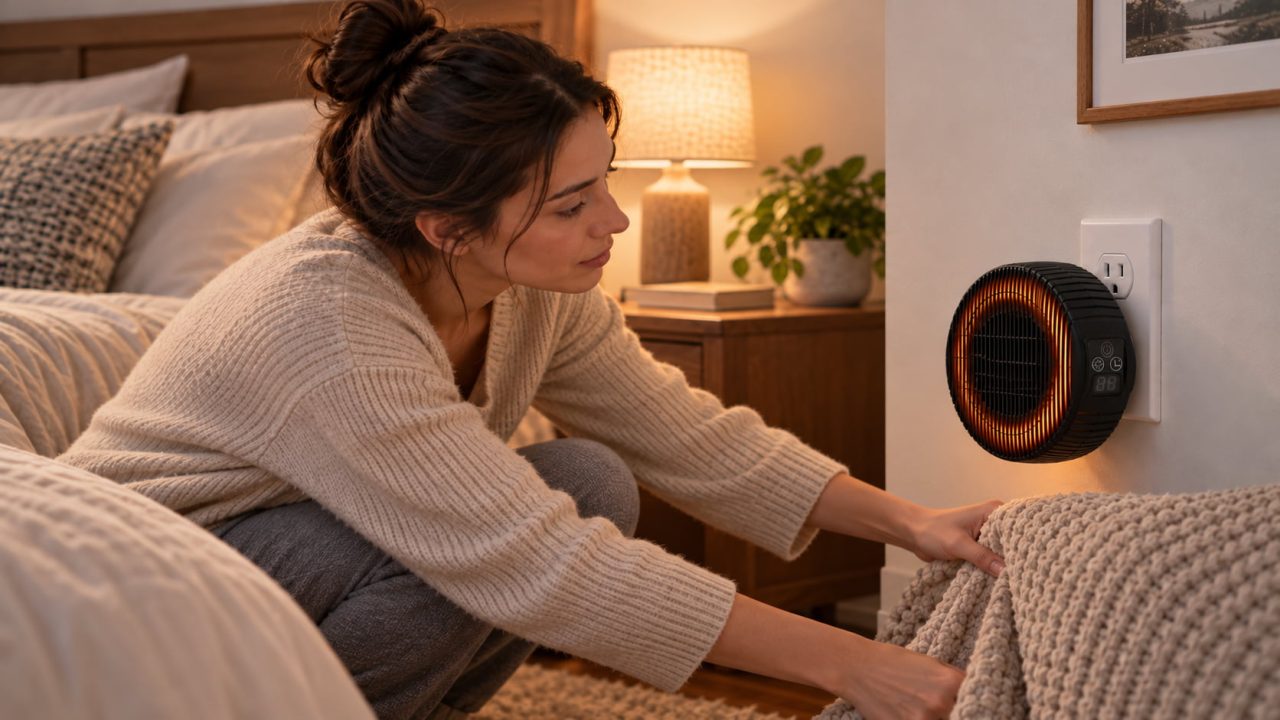
If your space heater has a tip-over safety switch, it may stop operating when the unit tilts, rocks, or is no longer sitting in its intended position.
This check mainly applies to freestanding heaters. Make sure the unit is positioned on a stable surface and set up according to the manufacturer’s instructions.
Not every heater uses the same safety system. A wall-plug model such as the WindBillion HT04 should only be evaluated based on the functions documented for that specific model.
4. Check the Thermostat or Temperature Setting
If your heater has thermostat control, stopping after the room reaches the selected temperature may be normal.
Watch what happens next. A heater that pauses and later resumes as the room cools may simply be cycling as designed.
A shutdown that occurs unpredictably only a few minutes after startup is different.
Also check whether the temperature or operating mode has been changed accidentally. If your heater does not include thermostat control, this step does not apply.
5. Check the Outlet and Power Source
An unstable electrical connection can also cause a heater to stop unexpectedly.
Make sure the plug is firmly connected and look for visible damage. If the plug, outlet, or nearby faceplate becomes unusually hot, or if the circuit repeatedly trips, stop using the heater.
The U.S. Consumer Product Safety Commission recommends plugging electric space heaters directly into a wall outlet rather than using an extension cord or power strip. It also advises keeping portable heaters away from combustible materials such as furniture, bedding, and curtains.
Do not attempt to repair electrical wiring, outlets, or internal heater components unless you are qualified to do so.
6. Check for an Internal Fault
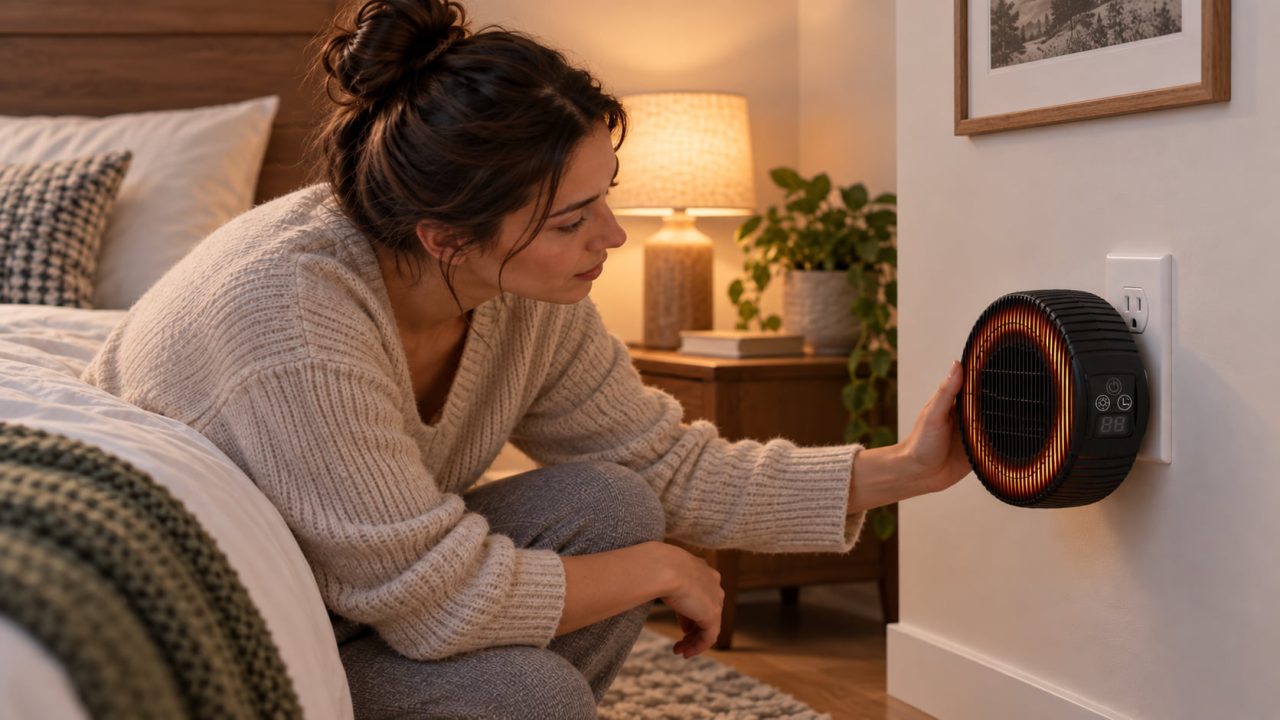
If the first five checks do not explain the problem, the heater may need professional inspection.
A burning smell, visible damage, unusual electrical sounds, repeated circuit trips, or continued shutdowns after the unit has cooled are signs that basic troubleshooting should stop.
Repeatedly turning the heater back on will not solve an internal electrical or component problem.
Contact the manufacturer, customer service, or a qualified repair professional instead.
When Is Automatic Shut-Off Normal Rather Than a Fault?
Automatic shut-off can be part of normal heater operation, especially on models with timers or built-in protection.
The WindBillion HT04, for example, includes built-in overheat protection, a 1–8 hour adjustable timer, and a 24-hour automatic shut-off. If the unit stops when a selected timer ends or reaches its documented automatic shut-off point, that does not by itself indicate a product failure.
An overheat shut-off is also a safety response rather than something to bypass. However, the reason for the excess heat should still be checked before normal use continues.
The pattern becomes more concerning when no timer is active, and the heater repeatedly stops soon after startup, particularly if the shutdown comes with excessive heat, a hot outlet, a burning smell, or another abnormal sign.
In other words, how and when the heater turns off matters as much as the fact that it turns off.
If you want to compare the heating formats and control features available across the current lineup, you can also explore WindBillion Halo Heaters.

When Should You Stop Using the Heater?
Not every shut-off means something is wrong. A heater that stops because a timer has ended, a temperature setting has been reached, or a documented safety function has activated may simply be responding as designed.
What matters is whether you can explain the pattern.
If the heater begins shutting off unpredictably, becomes unusually hot, develops a burning smell, affects the outlet or circuit, or continues stopping after obvious airflow and setting issues have been ruled out, further troubleshooting is no longer useful. At that point, leave the heater off and contact the manufacturer or a qualified professional for help.
Understanding why your space heater keeps turning off is less about forcing it to stay on and more about recognizing when a shut-off is normal—and when the heater is telling you that something needs attention.