
How Long Can a 16000mAh Retractable Fan Run on One Charge?
Table of Contents
A 16000mAh Retractable Fan can provide long cordless runtime, but battery capacity alone cannot tell you exactly how many hours it will run. Fan speed, power demand, additional functions, and daily usage habits can all affect actual battery life.
The WindBillion H6 Retractable Fan uses a built-in 16000mAh rechargeable battery and can provide up to 38.5 hours of cordless operation under suitable conditions. That figure represents the maximum reference runtime rather than what every user should expect at every setting.
Understanding why runtime changes makes it easier to judge whether one charge can cover an overnight session, a full workday, or several shorter periods of use.
How Long Can a 16000mAh Retractable Fan Actually Run?
The H6 is rated for up to 38.5 hours of cordless use, but the phrase “up to” is important.
A fan running mainly at a lower speed uses less power and can operate longer than the same fan running continuously at stronger airflow. Oscillation and other powered functions may also reduce the available operating time.
This means two people using the same 16000mAh fan can experience different runtimes without either battery necessarily having a problem.
It is more useful to treat 38.5 hours as an upper reference point and then compare it with your normal fan settings and daily routine.
Why Doesn’t a 16000mAh Battery Equal a Fixed Runtime?
Milliamp-hours, or mAh, describe battery capacity. They indicate how much electrical charge a battery can store, but they do not show how quickly a fan will use that stored energy.
A larger battery can support longer cordless operation, but actual runtime still depends on power consumption. For a broader explanation of how batteries store and release energy, see the U.S. Department of Energy’s guide to how batteries work.
Fan Speed Changes Power Demand
Fan speed is one of the main variables affecting runtime.
Lower airflow places less demand on the motor and is generally better suited to longer operating periods. Increasing the speed requires more power, so the battery discharges faster.
This is why the maximum advertised runtime should not be interpreted as the expected runtime at the highest setting.
Additional Functions Can Affect Runtime
Other powered functions can also influence battery life.
For example, oscillation adds additional movement while the fan is operating. Using several functions together may therefore reduce runtime compared with basic low-speed fan operation.
The most useful estimate comes from how the fan is actually used rather than the 16000mAh number alone.
What Can One Charge Look Like in Everyday Use?
A practical way to understand battery capacity is to compare it with the number of hours you normally use a fan.
Overnight Use
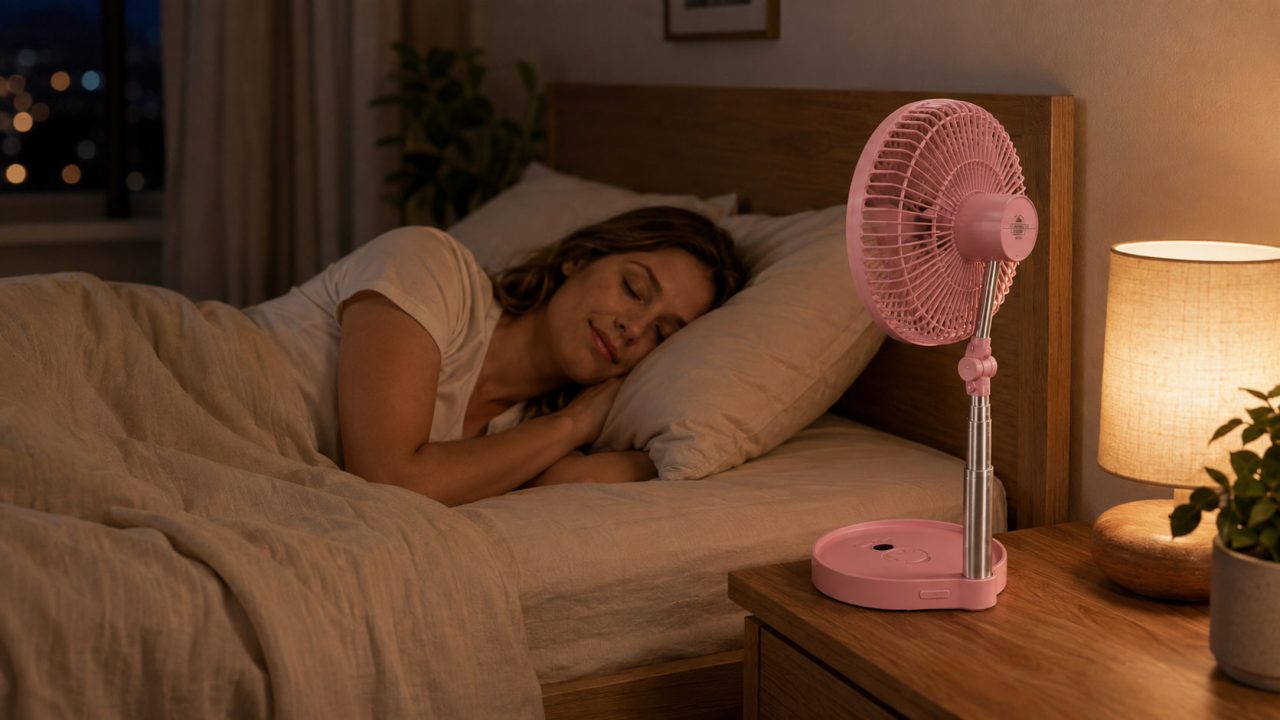
An eight-hour night represents only part of the H6’s maximum 38.5-hour reference runtime.
Depending on the selected settings, one charge may cover more than one eight-hour night, although actual runtime will vary with fan speed and other functions.
Rather than assuming every night consumes the same amount of battery, start from a full charge and observe the result over the first few nights.
A Full Workday
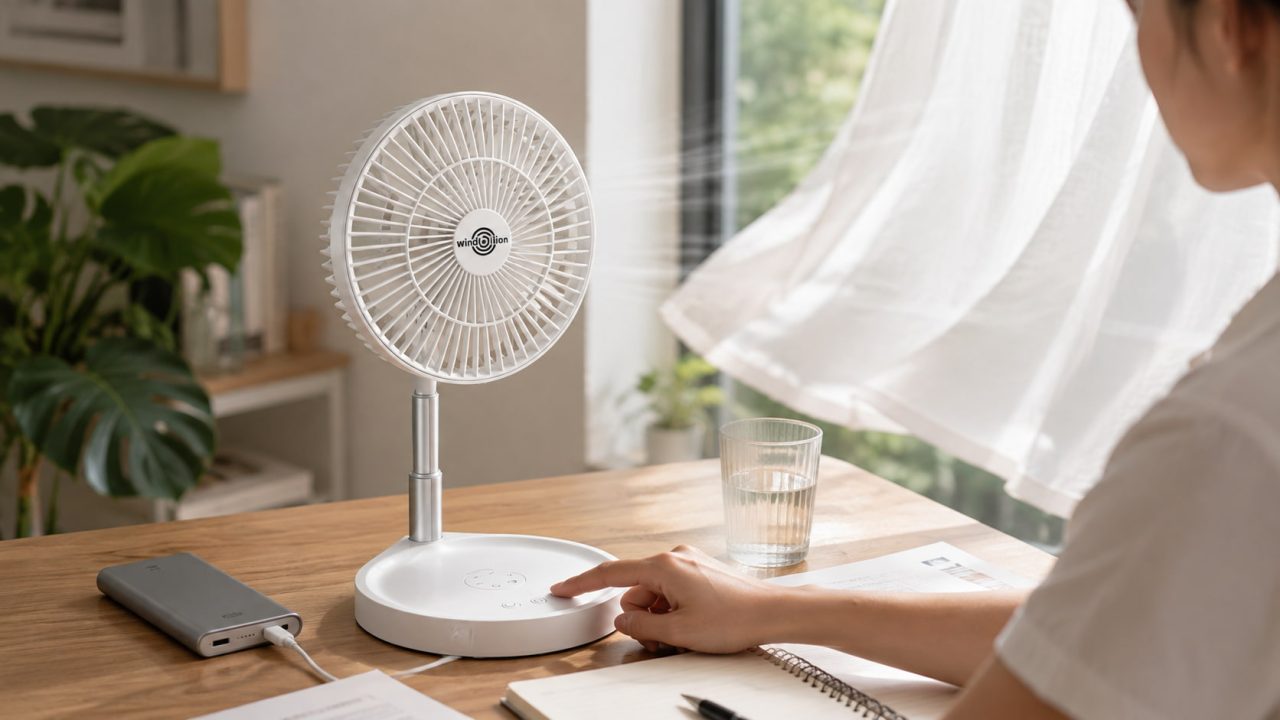
An eight-to-ten-hour workday is shorter than the H6’s published maximum runtime, but the remaining battery will depend on the selected fan speed and other functions.
If you plan to use the H6 as a Rechargeable Desk Fan away from an outlet all day, testing your preferred setting beforehand gives a more realistic estimate than relying only on the battery specification.
Intermittent Daily Use
Not everyone needs a fan running continuously.
You may use it for a few hours while working, switch it off when leaving the room, and turn it on again beside the bed later.
With this type of routine, one charge can stretch across several calendar days even though the total operating hours remain the more useful measurement.
Why Might Rechargeable Fan Battery Life Be Shorter Than Expected?
Shorter runtime does not automatically mean the battery is defective.
Common reasons include:
- Using stronger airflow for long periods;
- Starting with a battery that was not fully charged;
- Frequently using oscillation or other powered functions;
- Leaving the fan running when no one is using it;
- Blocking the intake or outlet and compensating with a higher speed;
- Normal battery capacity reduction after long-term use;
- Expecting the maximum advertised runtime at every setting.
If battery life suddenly becomes much shorter under the same conditions, compare several complete charge cycles before deciding that battery performance has changed significantly.
How Can You Estimate Cordless Fan Runtime?
You do not need a complicated calculation to create a useful estimate.
Start with a full charge and record approximately how many hours you use the Retractable Fan each day. Also note whether most of that time is spent at low, medium, or stronger airflow.
For example, if you normally use the fan for six hours a day, track how many days pass before it needs charging again. This gives you a practical runtime based on your own settings rather than a maximum reference figure.
Repeat the test if your routine changes significantly during hotter weather.
A personal benchmark is particularly useful before travel, overnight use, or other situations where convenient charging may not be available.
How Can You Make a Fan Battery Last Longer?
Longer runtime does not mean the fan must always remain at its weakest setting. The aim is simply to avoid using more power than necessary.
Use the Lowest Comfortable Speed
Choose the lowest setting that still provides enough airflow.
If a medium setting already feels comfortable, running the highest speed continuously will shorten battery life without always providing enough additional benefit to justify the extra power use.
Keep the Airflow Path Clear
Do not place objects directly against the intake or outlet.
Good airflow can make a lower setting feel more effective. When the H6 is used as a Telescopic Fan, adjusting its height or position may improve where the air reaches without increasing fan speed.
Turn It Off When It Is Not Needed
A fan running in an empty room still consumes battery.
Turning it off while you are away from the desk, bedroom, or living area is one of the simplest ways to extend the time between charges.
Charge Before Long Cordless Sessions
If the fan will be needed overnight, throughout a workday, or somewhere without easy access to an outlet, charge it beforehand.
Planning ahead is more reliable than assuming the remaining battery will cover an unusually long session.
Is a Larger Fan Battery Always Better?
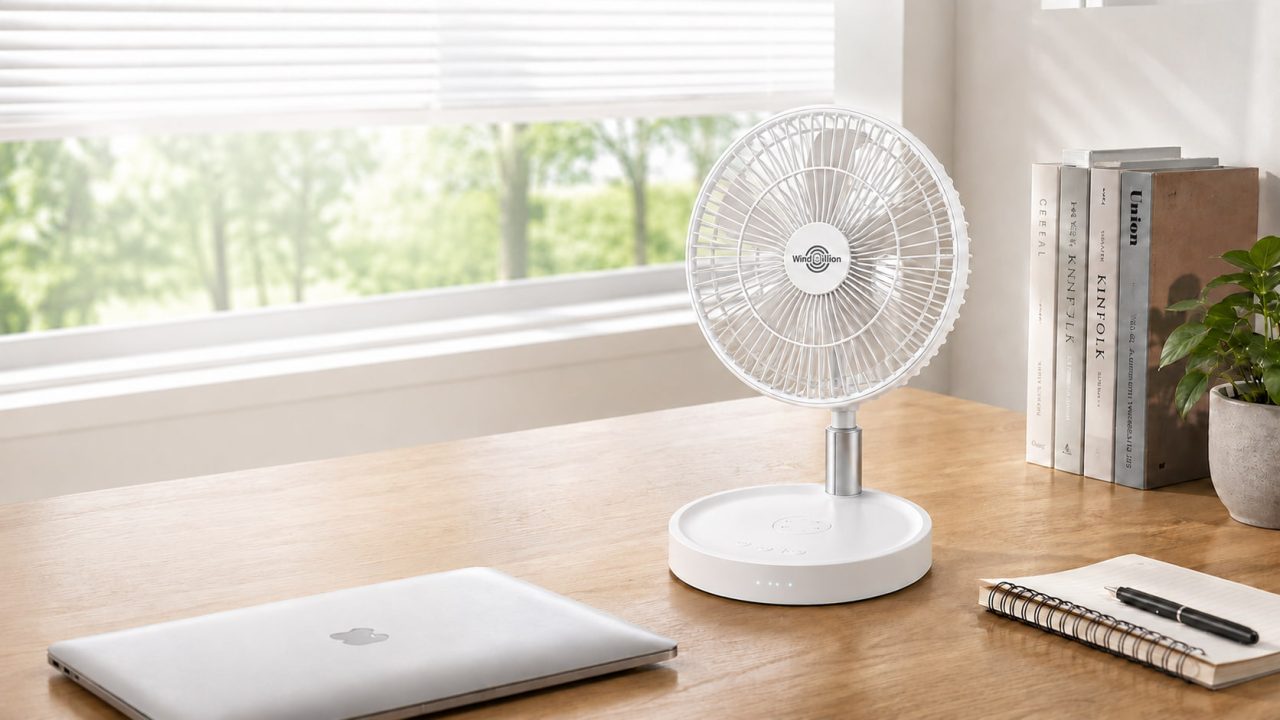
A larger battery can reduce how frequently a rechargeable fan needs to be charged, but battery capacity is only one part of the overall experience.
Noise, airflow, size, weight, adjustability, storage, and where the fan will normally be used also matter.
Someone who runs a fan for many hours each day may benefit from a 16000mAh battery because it reduces charging interruptions. A person who only uses a fan for short periods may care more about compact size or portability.
The better choice depends on how often the fan will operate away from a power source.
Long Runtime Depends on More Than Battery Capacity
A 16000mAh battery can support long cordless operation, but it does not translate into one fixed number of hours for every user.
The WindBillion H6 Retractable Fan can provide up to 38.5 hours of runtime under suitable conditions, while actual battery life changes according to fan speed, additional functions, and daily usage habits.
The most useful approach is to treat the published runtime as a reference and then track one or two complete charge cycles under your normal settings. Once you understand how your own Retractable Fan performs, it becomes much easier to predict whether one charge will cover a night, a workday, or several shorter sessions.