
A humidifier for a reptile terrarium can make daily humidity control easier when room temperature, ventilation, heating equipment, and seasonal conditions keep changing. Manual spraying may provide temporary moisture, but repeating it several times a day can become inconvenient.
A Humidifier can simplify this process by pumping water through tubing to adjustable nozzles, which create controlled mist inside the enclosure. The main unit remains outside the terrarium, while the nozzles deliver moisture to selected areas.
The WindBillion H50 can be used independently for room humidification or connected to tubes and misting nozzles for reptile enclosures. Its touch controls allow users to adjust the water output, spray duration, and interval between misting cycles.
A Reptile Terrarium Humidifier Needs Species-Specific Settings
Not every reptile or amphibian requires the same humidity level. Tropical species may need a humid environment, while desert reptiles generally require drier conditions and should not live in a constantly wet enclosure.
Research the natural habitat and care requirements of the animal before setting an automatic misting schedule. Use a hygrometer to measure the enclosure rather than judging humidity only by the amount of visible mist.
The entire terrarium may not need to have the same moisture level. Some animals benefit from a moist hide, planted area, or humid section while still needing access to a drier resting or basking zone.
Refer to reliable reptile husbandry guidance and consult an exotic-animal veterinarian when the species has specific health or environmental needs.
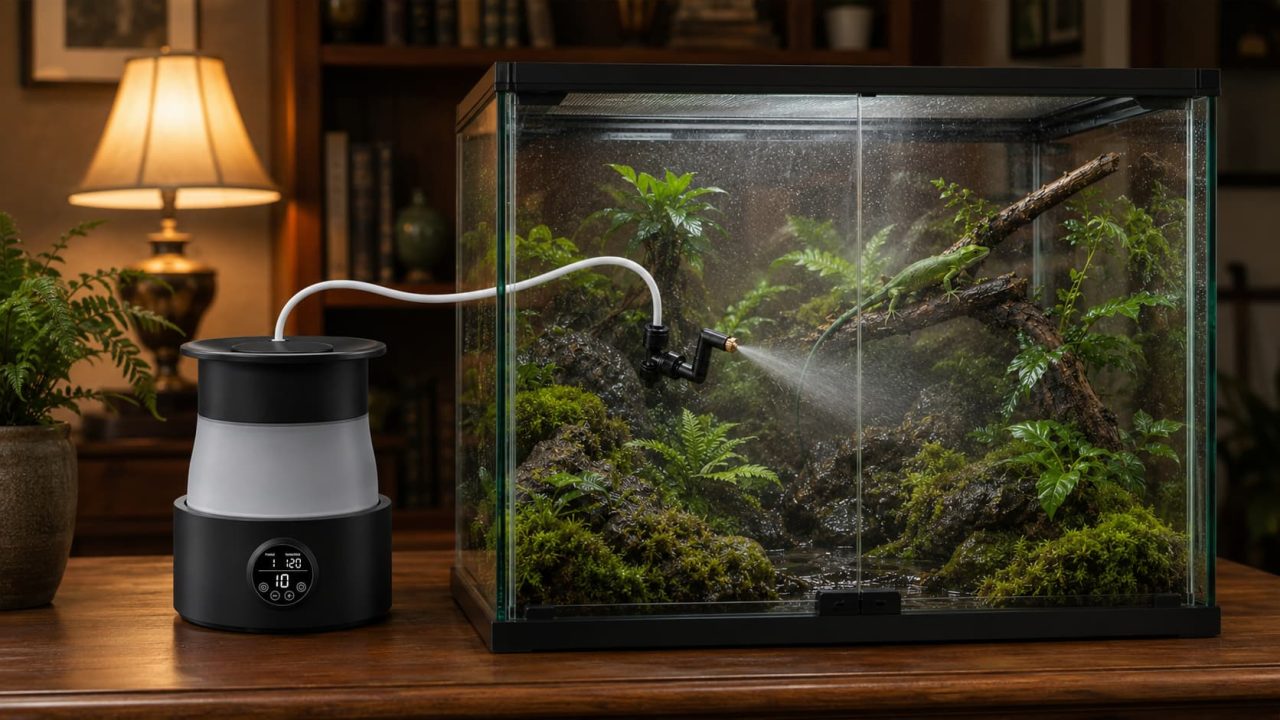
How Should You Connect the Humidifier to the Terrarium?
A safe setup keeps the water tank, touch controls, and power connection outside the enclosure. Only the tubing and secured nozzles should extend into the terrarium.
Keep the Main Unit Outside the Enclosure
Place the H50 on a stable, level, and dry surface beside the terrarium. This prevents the animal from reaching the power cable, water tank, or controls.
Keeping the unit outside also preserves more enclosure space for hides, branches, plants, feeding areas, and movement. Do not position it where mist or dripping water can reach the machine.
Route the Tube Carefully
Guide the tube toward the enclosure using the shortest practical route. Avoid sharp bends, tight loops, or compressed sections that could restrict water flow.
Check that the lid, door, stand, or nearby furniture does not pinch the tubing. Leave enough slack for cleaning and adjustments without allowing the tube to hang loosely where it may be pulled.
Secure Every Nozzle
Attach each nozzle firmly before starting the pump. Test the system while watching the enclosure so you can confirm that the tubing remains connected and the nozzles stay in position.
A loose nozzle may turn and spray the glass door, lighting equipment, electrical accessories, or the area outside the terrarium.
Where Should You Aim the Terrarium Misting Nozzles?
Nozzle direction determines where the moisture collects. The goal is to distribute mist across suitable areas without soaking one section of the enclosure.
Aim the spray toward plants, leaves, branches, or designated humid zones. Some reptiles and amphibians may also drink droplets that collect on suitable surfaces.
Avoid directing mist toward heat lamps, electrical connections, thermostats, cameras, sensors, or other powered equipment. The spray should not continuously target the animal’s main sleeping, feeding, or basking area.
When using the H50 as a Mist Maker, begin with the nozzles angled away from the viewing glass. Run a short test cycle, inspect where the droplets land, and adjust any nozzle that leaves one area dry or another excessively wet.
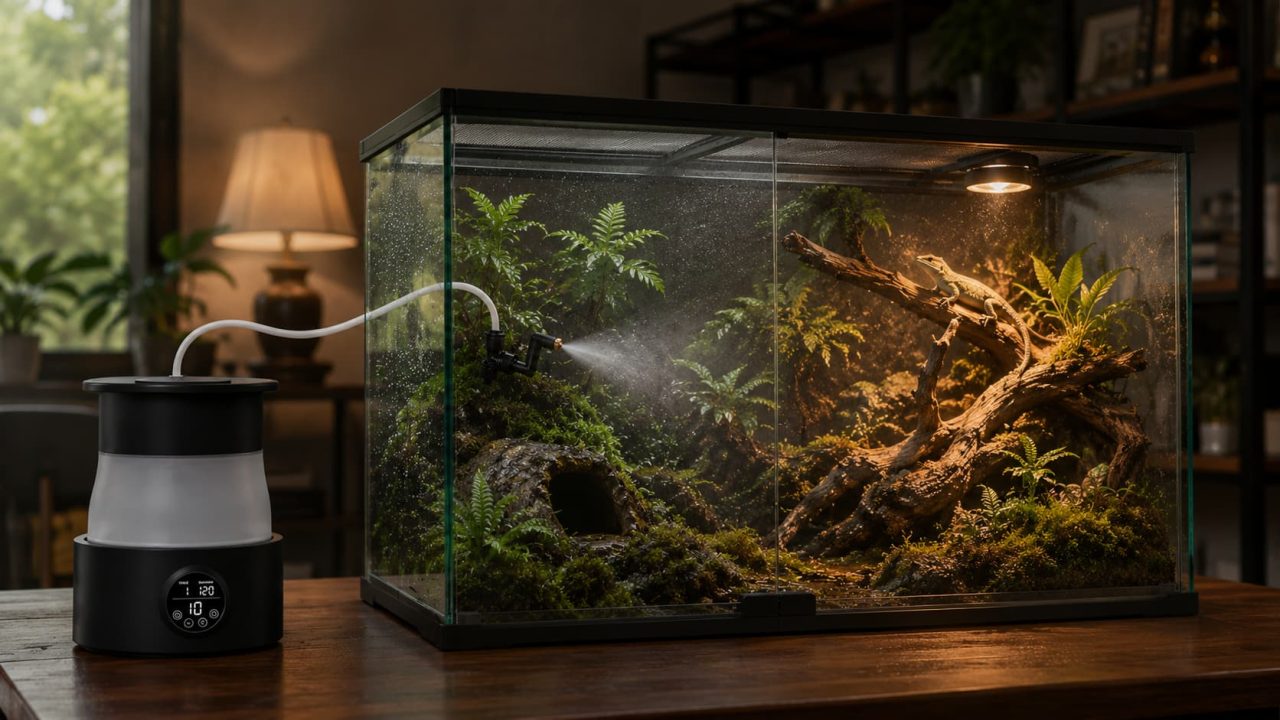
How Should You Set the Automatic Misting Cycle?
The Humidifier H50 allows the water output, spray duration, and interval between cycles to be adjusted. These settings should reflect the enclosure conditions rather than simply using the highest available level.
Begin With a Short Spray Duration
Start with a short cycle and lower water output. Observe how quickly the humidity rises and how much moisture reaches the substrate, plants, hides, and glass.
You can gradually increase the duration when the enclosure remains below the target range. Starting with too much water may soak the substrate before you understand how the terrarium responds.
Allow Some Drying Between Cycles
A humid enclosure does not need to remain visibly wet throughout the day. Air circulation and partial drying help prevent water from collecting continuously on the glass, decorations, and substrate.
Watch how the hygrometer reading changes after each cycle. The humidity should rise after misting and then gradually settle as air moves through the enclosure.
Adjust the Schedule When Conditions Change
A schedule that works during one season may not work throughout the year. Heating equipment, air conditioning, room humidity, ventilation, enclosure size, and substrate all affect evaporation.
Review the settings after moving the terrarium, changing the substrate, adjusting ventilation, or adding new heating equipment.
How Can Multiple Nozzles Improve Coverage?
A single nozzle may be enough for a compact terrarium, but larger enclosures often need moisture distributed across several areas.
The H50 supports a four-nozzle setup and can be expanded with optional Y-shaped connectors for broader coverage. Multiple nozzles can target separate plant groups, climbing sections, or humidity zones instead of forcing one nozzle to spray more heavily.
After changing the tubing layout, test every outlet and confirm that the water pressure remains suitable. Adding more nozzles does not automatically mean that the spray duration should be increased.
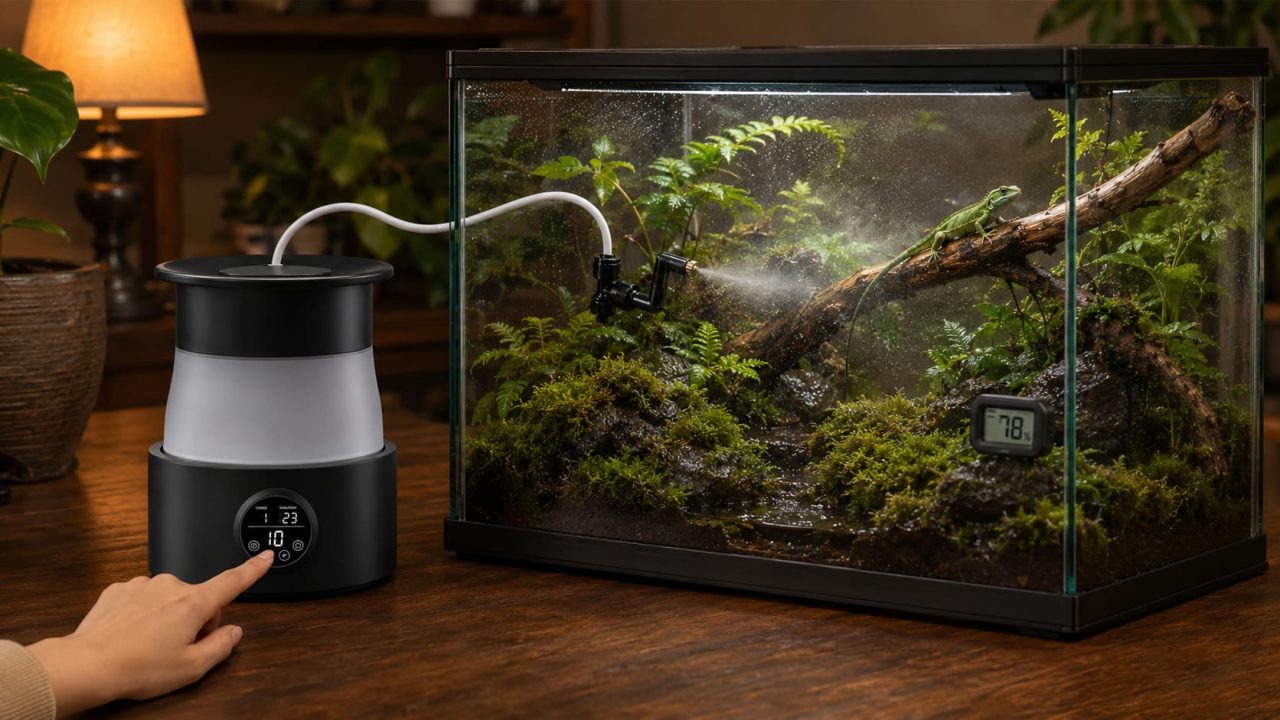
How Should You Monitor Humidity After Misting?
Place the hygrometer where it represents the general enclosure rather than directly beside a nozzle. A sensor positioned inside the mist stream may display a high reading that does not reflect the rest of the terrarium.
Check the humidity before misting, shortly after the cycle, and again after the enclosure has had time to ventilate. This helps you see whether the schedule produces a controlled temporary rise or keeps the enclosure wet for too long.
Also inspect the physical conditions. Reduce the output or increase the interval between cycles when you notice persistent condensation, saturated substrate, standing water, stale odors, or surfaces that never dry.
Pause the system immediately if a nozzle shifts toward electrical equipment, a tube begins leaking, or water starts escaping from the enclosure.
How Should You Clean the Tank, Tubes, and Nozzles?
A large tank reduces the frequency of refilling, but stored water and internal components still require regular maintenance.
Do not repeatedly add fresh water on top of old water without inspecting the tank. Replace the water regularly and empty the system when it will not be used for an extended period.
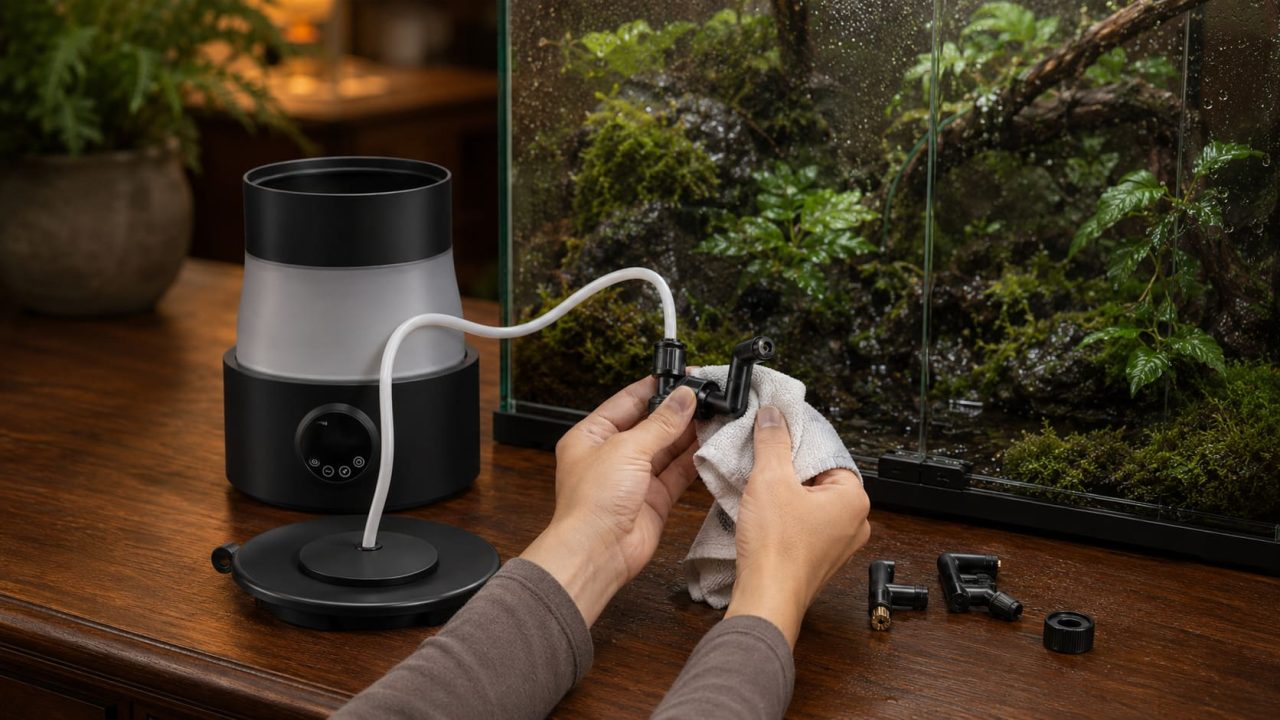
Disconnect the Large Capacity Humidifier from power before cleaning. Check the tank, tubing, connectors, and nozzles for mineral deposits, residue, algae, or blockages.
Flush the tubing and confirm that every nozzle sprays evenly before restarting automatic operation. Any cleaning product used must be removed completely so that residue is not sprayed into the enclosure.
A Humidifier Can Make Terrarium Humidity Easier to Manage
A Humidifier can make reptile terrarium care more consistent by delivering water through adjustable tubing and nozzles on a controlled schedule.
The most effective setup keeps the main unit outside the enclosure, directs mist toward appropriate humidity zones, and begins with shorter cycles. Settings should then be adjusted according to hygrometer readings, ventilation, surface moisture, and the needs of the species.
With secure nozzles, regular cleaning, and daily observation, the WindBillion H50 can reduce repeated manual spraying while still allowing the terrarium to maintain both humid and drier areas.