
A fan can be running normally and still leave you feeling less cool than expected.
That does not automatically mean something is wrong with the motor or battery. A fan mainly moves the air already around you rather than lowering the room temperature. How cool that airflow feels also depends on room conditions, humidity, distance, direction, and whether air can move freely through the fan.
If your fan is blowing but the cooling feels weak, start with the airflow path and the environment before assuming the fan itself has failed.
Why Is My Fan Not Cooling Me Down Even When It Is Running?
A fan and an air conditioner do different jobs.
The U.S. Environmental Protection Agency explains that portable electric fans do not cool the air itself. Instead, moving air can help you feel cooler partly by supporting the evaporation of sweat.
That means a fan may be working correctly even when the air coming from it does not feel particularly cold.

The Room Air May Already Be Very Warm
A fan moves the air that is already in the room.
If a bedroom, office, or other enclosed space has been heating up for hours, increasing fan speed does not turn that warm air into cold air.
Reducing direct sunlight, allowing cooler air into the room when conditions permit, or moving to a cooler space can sometimes make a larger difference than simply turning the fan to its highest setting.
High Humidity Can Reduce the Cooling Sensation
Sweat helps the body release heat as it evaporates.
When the air is already humid, evaporation becomes less effective. That is one reason the same fan can feel more refreshing on a dry day than on a hot, humid one.
So weak cooling does not necessarily mean weak airflow.
Check the Airflow Before Assuming the Fan Is Weak
If the room conditions are reasonable but the fan still feels weaker than usual, check whether air can move freely through it.
Dust, blocked vents, and nearby objects can all interfere with the airflow path.
Keep the Air Intake Clear
A fan needs to draw air in before it can push air out.
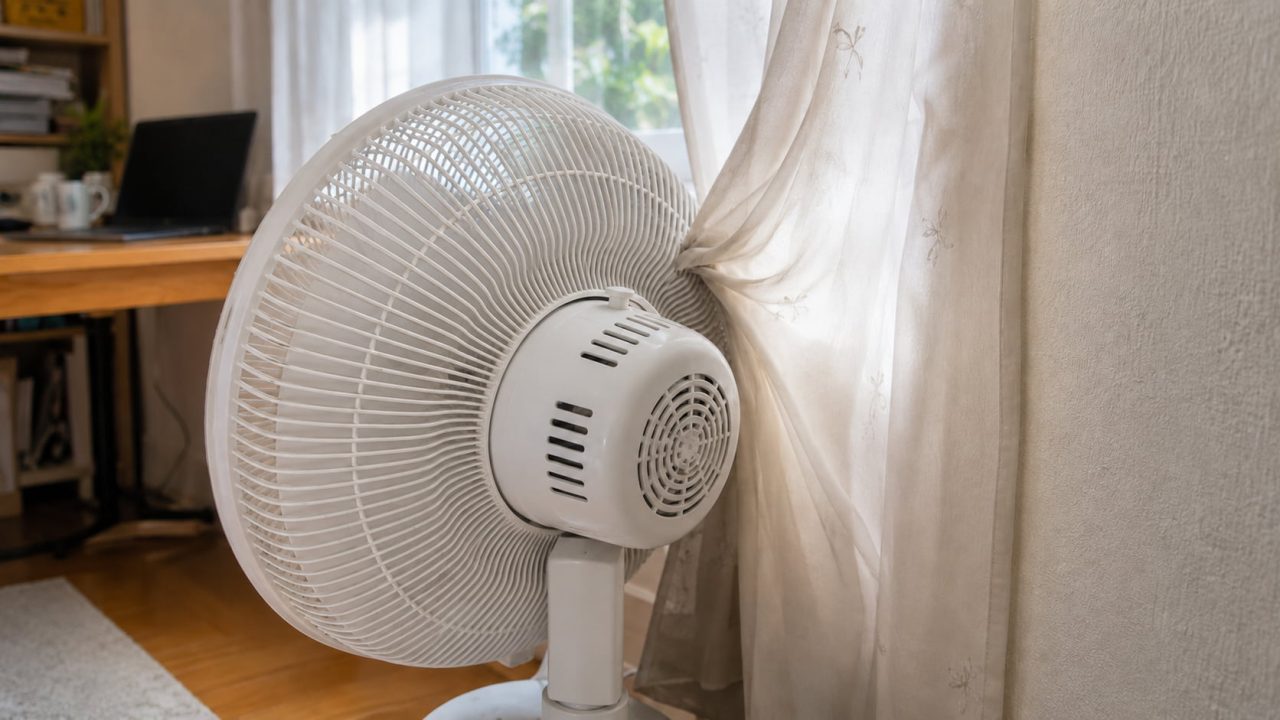
Avoid placing the rear intake directly against a wall, pillow, curtain, bag, or other object. Fabric can also be pulled toward the intake and restrict airflow without completely stopping the fan.
Give the intake some open space and check the airflow again before changing anything else.
Check the Grille and Vents for Dust
Dust, hair, and lint can gradually collect around the intake, outlet, and grille.
If your fan used to feel stronger and has slowly become weaker, visible buildup is worth checking first. Regular cleaning can help keep the airflow path clear. For a step-by-step approach, see our guide on how to clean a desk fan without damaging it.
Remove loose dust from accessible areas and keep moisture away from the motor, battery, controls, and charging port.
Do not force open a housing that is not designed for routine cleaning.
Fan Position Can Change How Much Cooling You Feel
A fan can have strong airflow and still feel ineffective if most of that air is missing you.
Before increasing the speed, check the height, angle, and distance.
Aim Airflow Toward Exposed Skin
Moving air is more noticeable when it actually reaches exposed skin.
If the fan is blowing into a chair, underneath a desk, or mostly into clothing, changing the angle may help more than selecting a higher speed.
Small personal fans in particular are generally intended to provide more focused airflow close to the user.
Match the Distance to the Fan
Airflow spreads as it travels, so distance can change how strong a fan feels.
A compact personal fan will not usually provide the same concentrated airflow from farther away that it provides at close range. Larger or height-adjustable models give you more flexibility in positioning.
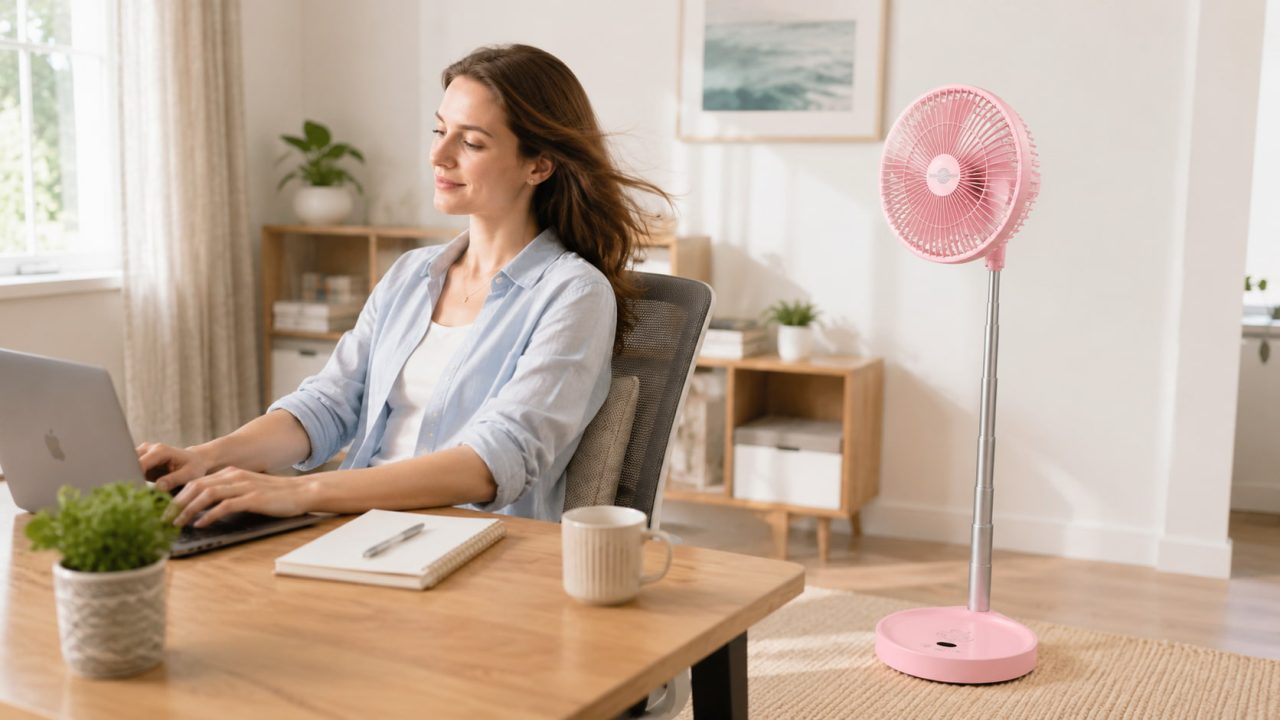
For example, the WindBillion H6 Collapsible Fan can switch between desktop and floor configurations, allowing the airflow height to be adjusted depending on whether you are sitting or standing.
The broader lesson is simple: adjust the fan’s position before assuming it needs more power.
Does Higher Fan Speed Always Feel Cooler?
Not necessarily.
Higher speed increases airflow, but it cannot fix every reason a fan feels ineffective.
If the room is very warm, the fan is badly positioned, or the intake is partly blocked, simply selecting the highest setting may not solve the actual problem.
For a rechargeable fan, higher settings also generally require more power. Start with a setting that provides useful airflow, then increase it when the conditions actually require more.
When Is the Fan Itself More Likely to Be the Problem?
Sometimes the environment is not the issue.
The clearest clue is often a noticeable change from the way the same fan normally behaves.
The Airflow Suddenly Becomes Weaker
If the fan is in the same position and running at the same setting but now moves much less air, inspect the intake and outlet first.
If they are clear and the change remains obvious, the fan may need further inspection.
You Notice Abnormal Noise, Heat, or Vibration
A change in sound or physical behavior deserves more attention than a simple change in how cool the airflow feels.
Stop using the fan if you notice severe vibration, unusual overheating, a burning smell, visible battery swelling, or other signs of damage.
A fan that feels less refreshing on a humid afternoon is very different from a fan that has suddenly started behaving abnormally.
When Airflow Alone Is Not Enough
Sometimes there is nothing wrong with the fan. You may simply want a different type of personal cooling.
Some portable devices add other cooling methods rather than relying only on airflow.
Mist Adds Evaporative Cooling
A misting fan adds fine water droplets to the moving air.
Because evaporation contributes to cooling, mist can create a different sensation from airflow alone. Environmental humidity still matters, so the effect will not feel identical in every condition.
Cooling Plates Provide Localized Contact Cooling
A cooling plate works through direct contact rather than trying to cool the entire surrounding room.
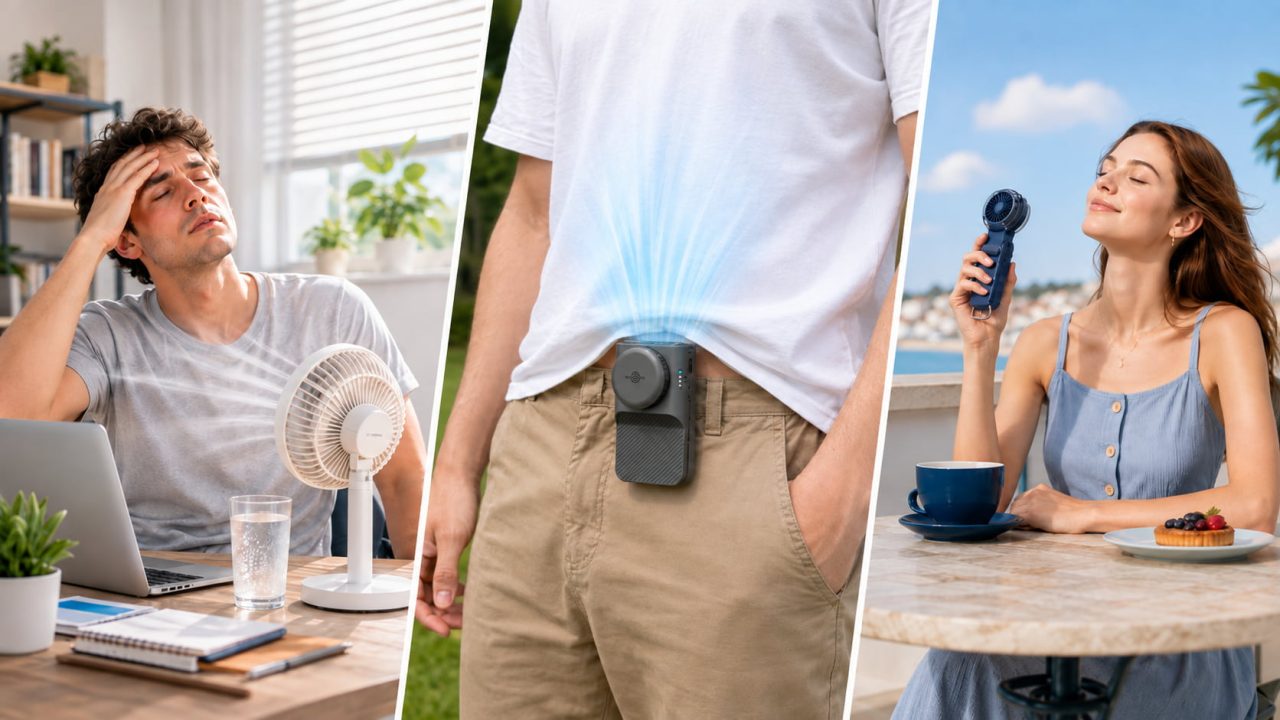
The WindBillion WF04 Ice Plate Waist Fan combines airflow with a direct-contact cooling plate.
The FB23 Neck-Wearable Cooling Mist Fan combines airflow, fine mist, and a cooling plate in one portable device.
These options do not mean an ordinary fan is failing. They simply provide different forms of personal cooling when airflow alone does not give you the sensation you want.
Do Not Rely on a Fan Alone During Extreme Heat
A fan can improve personal comfort, but extreme indoor heat is a different issue.
The EPA advises that portable electric fans should not be relied on to prevent heat-related illness when indoor temperatures become extremely high. In those conditions, moving to an air-conditioned or cooler location is more important than simply increasing fan speed.
You can read the EPA’s extreme heat and indoor air quality guidance.
During dangerous heat, prioritize a cooler environment, reduce heat exposure, stay hydrated, and follow local heat-safety guidance.
A stronger fan is not a substitute for getting out of dangerous heat.
Better Cooling Starts With Airflow, Position, and Conditions
When a fan is blowing but does not feel very cooling, start with the simplest explanation.
Check whether the intake and outlet are clear. Remove visible dust. Adjust the angle and distance so the airflow reaches you directly. Then consider whether room temperature or humidity is limiting how refreshing that airflow feels.
If the fan has suddenly become weaker, noisier, hotter, or more unstable than before, the problem may be with the fan itself rather than the environment.
When the fan is working normally but airflow alone does not provide the type of cooling you want, mist or direct-contact cooling offer different options.
Understanding those differences makes it easier to tell whether your fan actually needs attention—or whether changing the airflow, position, or surrounding conditions is enough.