
A humidifier does not have to serve only one room or one routine. The WindBillion H50 can operate independently to add moisture to indoor spaces or connect to tubing and adjustable nozzles for reptile terrarium misting.
The correct setup depends on where the unit is being used. A bedroom requires careful placement and moderate output, while a reptile enclosure needs secured tubing, directed nozzles, and humidity monitoring.
Here are seven practical ways to adapt the H50 to different needs around the home.
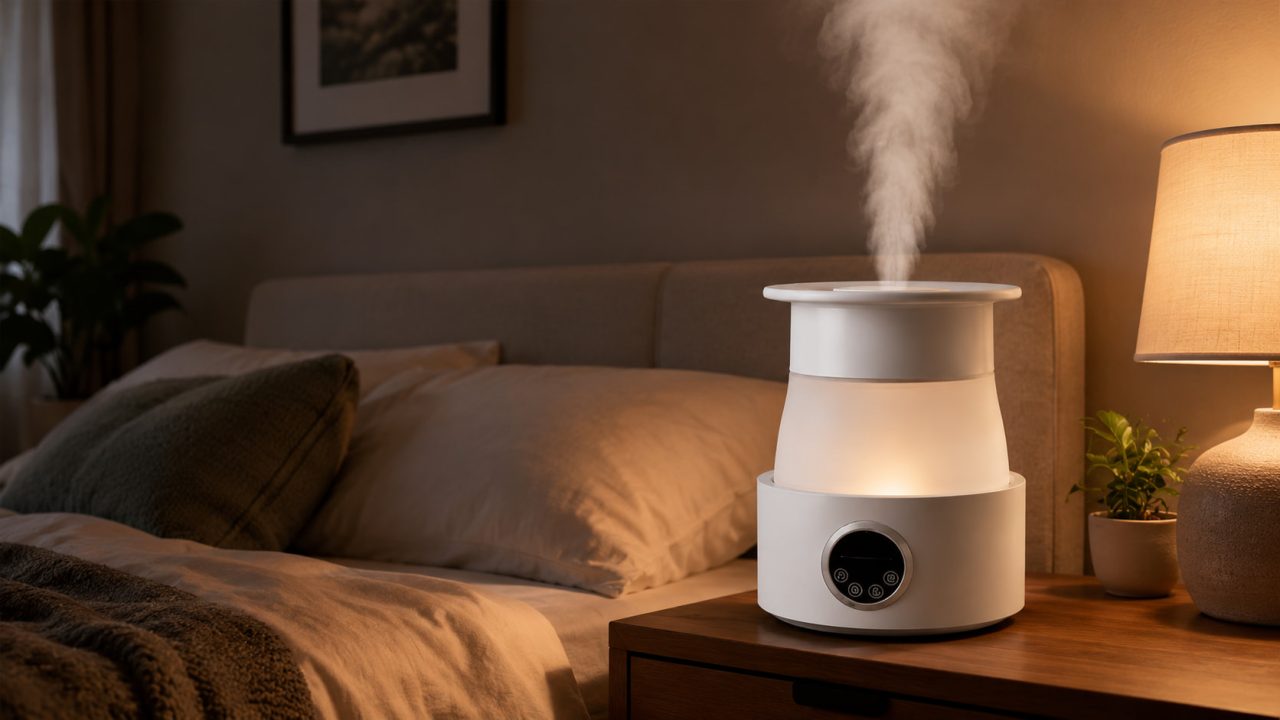
1. Add Moisture to an Air-Conditioned Bedroom
Air conditioning can make some bedrooms feel dry after operating for several hours. Running a humidifier at a moderate setting may help add moisture while you sleep, read, or relax.
Place the unit on a stable, water-resistant surface with open space around the outlet. Do not aim the mist directly toward bedding, curtains, walls, wooden furniture, or electronic devices.
Start with a lower output and check the room before increasing it. Reduce the setting or shorten the operating time if condensation appears on the windows or nearby surfaces begin to feel damp.
A hygrometer can provide a clearer picture of the room than visible mist alone. It helps prevent unnecessary operation when the indoor humidity is already comfortable.
For additional precautions, refer to the EPA’s guidance on the use and care of home humidifiers.
2. Make a Home Office More Comfortable
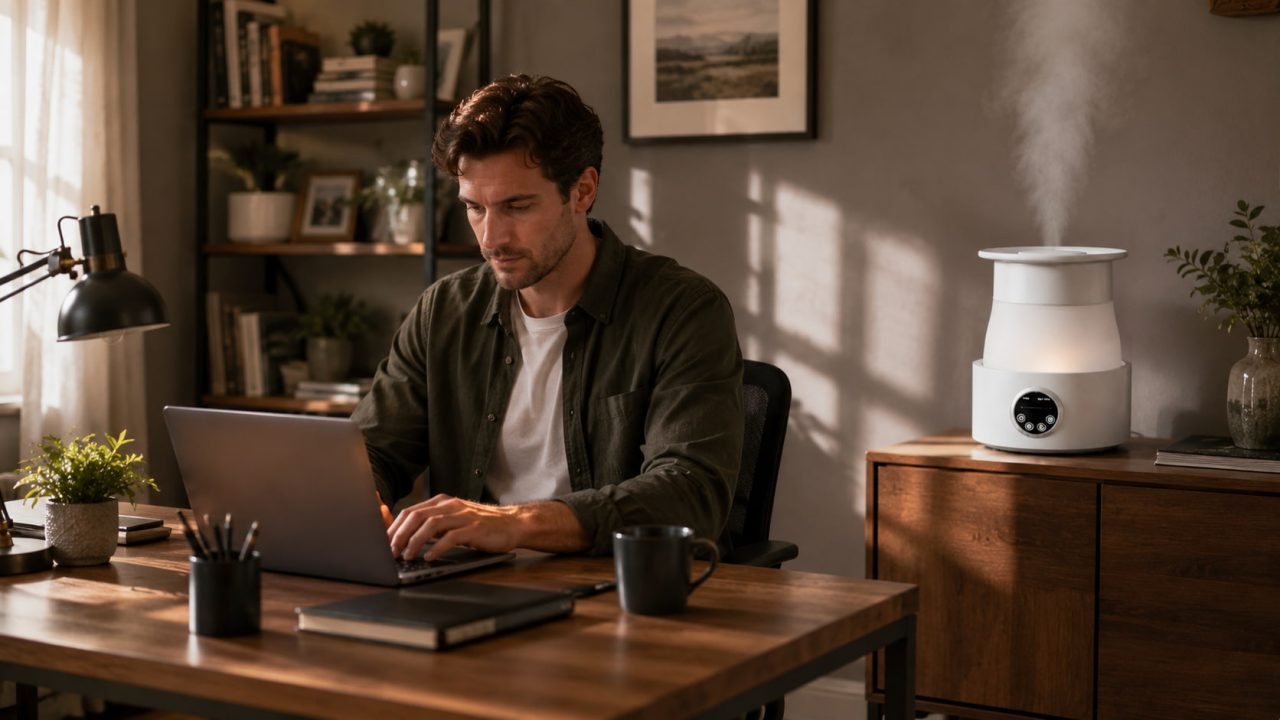
Heating and air conditioning can also affect the comfort of a home office, particularly when the room remains closed for much of the working day.
Position the unit away from laptops, monitors, paperwork, power strips, and other equipment that should remain dry. The mist should disperse into the open room instead of landing continuously on the desk.
Quiet operation is useful during calls, focused work, and study sessions. Touch controls also make it easier to adjust the output when room conditions change.
The machine does not need to run continuously throughout the working day. Check the room periodically and switch it off when sufficient moisture has already been added.
3. Add Moisture to a Heated Living Space
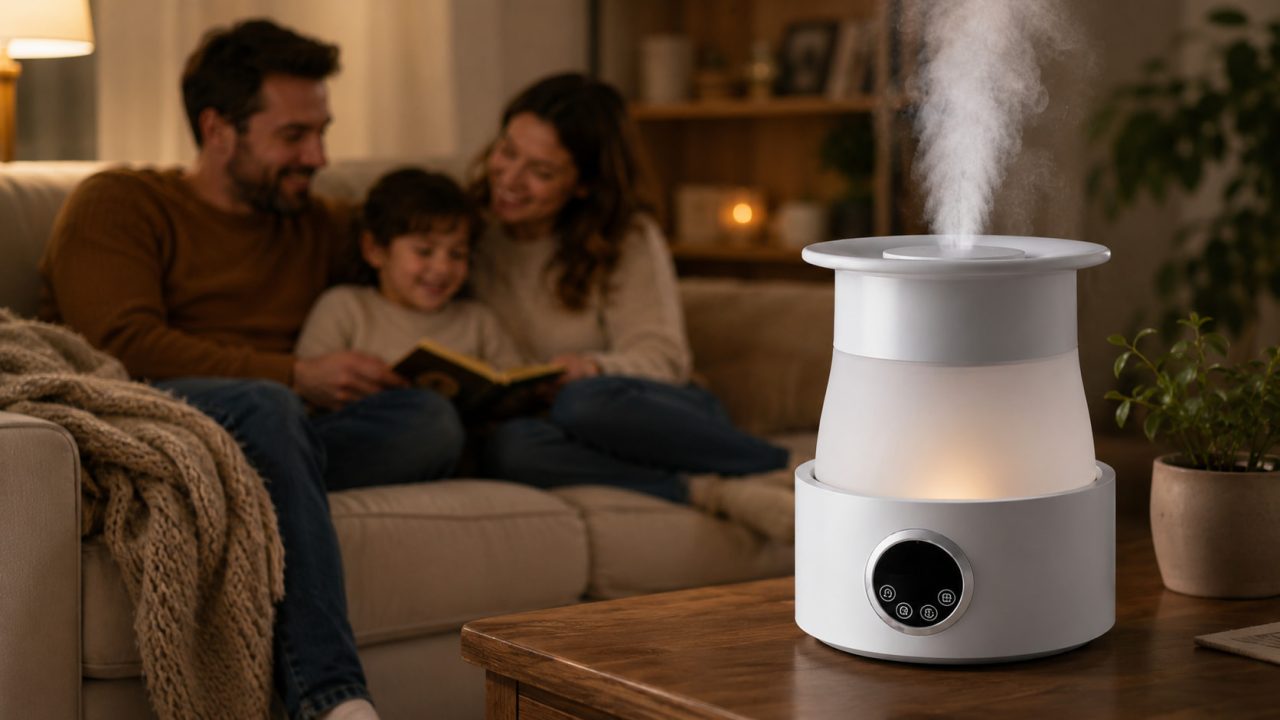
Indoor heating may make a living room or shared family space feel dry during colder weather. A humidifier can be moved into the room when people are relaxing, watching television, or spending time together.
Choose an open location where furniture will not block the mist. Avoid narrow shelves, enclosed cabinets, and positions immediately beside walls or upholstered seating.
Because living rooms are often larger than bedrooms, it may take longer for the added moisture to spread through the space. However, this does not mean the unit should immediately be placed on its highest output.
Begin at a moderate level and observe both the room and nearby surfaces. Placement and airflow can affect moisture distribution just as much as the selected setting.
4. Run It During Longer Overnight or Work Sessions
A larger water tank can be helpful when the unit is needed for several hours. It reduces the need to interrupt sleep, work, or relaxation simply to refill the machine.
The WindBillion Large Capacity Humidifier is suitable for longer sessions when the output is matched to the size and conditions of the room.
A large tank should not encourage users to leave the same water inside indefinitely. Inspect the tank before use, replace standing water regularly, and avoid repeatedly pouring fresh water on top of older water.
Water consumption will also change with the selected output. A stronger setting will normally empty the tank faster than a moderate one, so actual runtime depends on how the machine is used.
5. Create a Humid Area Inside a Reptile Terrarium
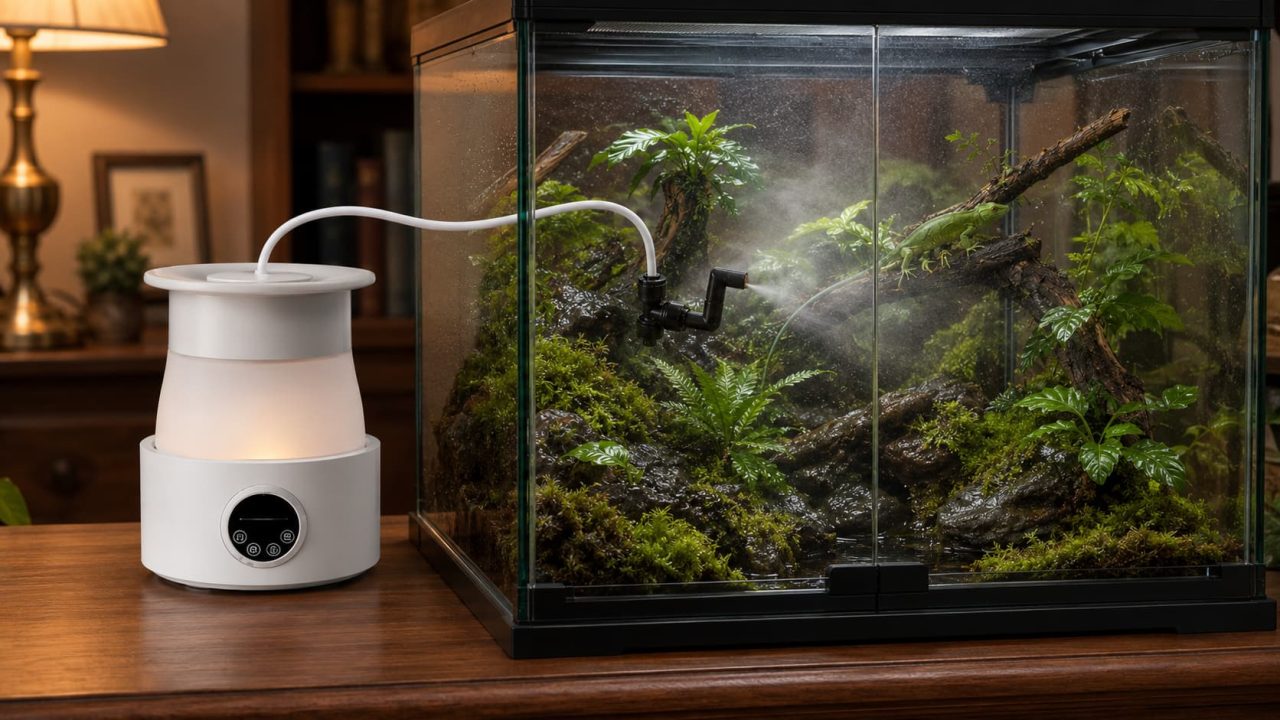
The H50 can also be placed outside a reptile enclosure and connected to tubing that supplies water to misting nozzles inside the terrarium.
Keeping the main unit outside protects the controls, tank, and power cable from the animal. It also preserves more internal space for branches, hides, plants, feeding areas, and movement.
The goal is not always to make the entire enclosure equally wet. Depending on the species, the terrarium may need a moist hide, planted section, misted climbing area, or humid zone alongside a drier resting or basking area.
Humidity requirements vary between reptiles and amphibians. Research the needs of the animal and monitor the enclosure with a hygrometer rather than selecting a schedule based only on visible droplets.
For instructions on tubing, nozzle placement, cycle settings, and humidity monitoring, read our guide on how a humidifier can help manage humidity in a reptile terrarium.
6. Direct Mist Toward Plants and Climbing Areas
Adjustable nozzles allow moisture to be directed toward selected parts of the enclosure rather than spraying heavily in one fixed direction.
When using the H50 as a Mist Maker, aim the nozzles toward suitable leaves, branches, climbing structures, or designated humid areas.
Some reptiles and amphibians may drink droplets that collect on surfaces. However, the spray should not continuously target the animal or soak its main sleeping, feeding, or basking location.
Run a brief test cycle before beginning automatic operation. Check where the water lands and reposition any nozzle that sprays the viewing glass, escapes through ventilation openings, or points toward powered equipment.
Mist should remain away from heat lamps, electrical connections, thermostats, cameras, sensors, and other accessories that need to stay dry.
7. Spread Mist Across a Larger Enclosure
A single nozzle may be enough for a compact terrarium, but a larger setup may need moisture distributed between several areas.
Multiple nozzles can cover separate plant groups, climbing sections, or humidity zones. This provides broader coverage without requiring one outlet to spray heavily into the same location.
The H50 supports a multi-nozzle arrangement and can be expanded with compatible connectors when additional coverage is required.
After changing the layout, test every outlet and inspect the complete tubing route. Make sure the tubes are not pinched, sharply bent, loose, or leaking.
Do not automatically increase the spraying time after adding more nozzles. First observe the coverage, check the hygrometer, and inspect the substrate and surfaces before adjusting the cycle.
Room temperature, enclosure ventilation, heating equipment, substrate, and seasonal humidity can all affect how quickly water evaporates. Review the settings whenever the enclosure or surrounding environment changes.
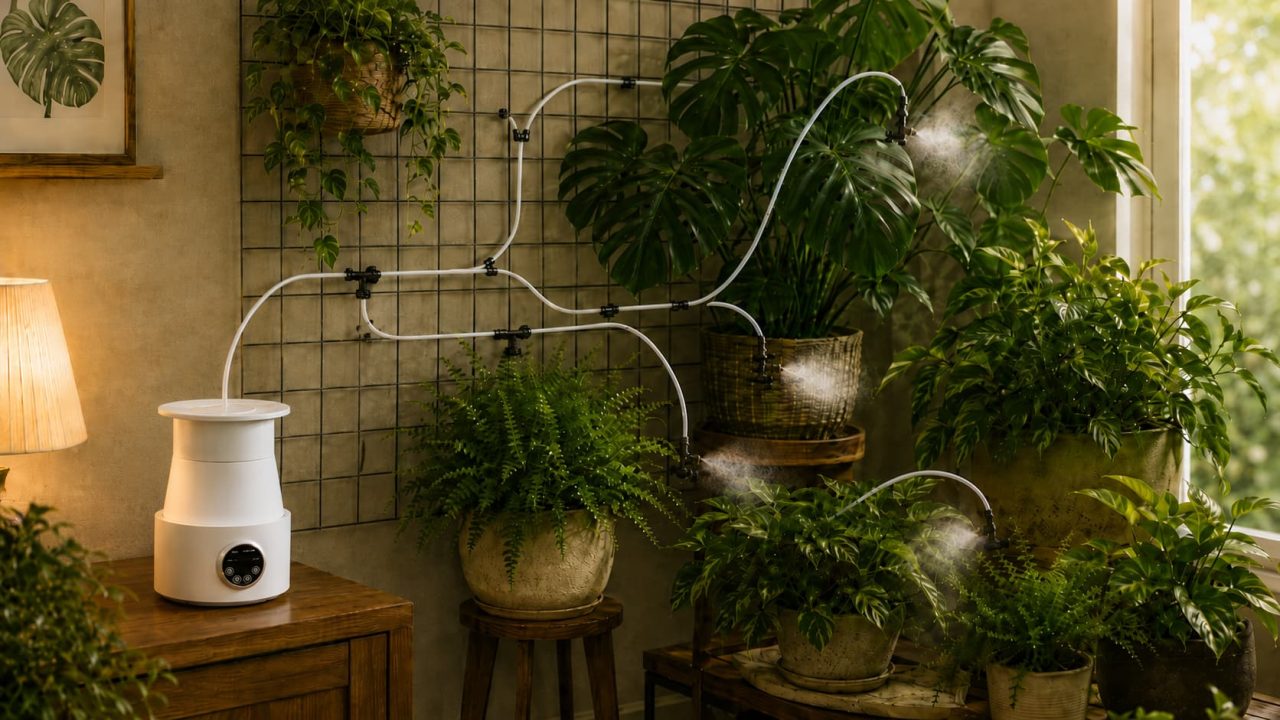
One Humidifier Can Support Different Daily Needs
The WindBillion H50 can add moisture to bedrooms, offices, and shared living areas while also supporting controlled misting inside a reptile terrarium.
For ordinary room use, focus on stable placement, moderate output, actual indoor humidity, and protecting nearby surfaces. For terrarium use, keep the main unit outside, secure the tubing, direct the nozzles toward suitable humid areas, and monitor the enclosure conditions.
With the correct setup and regular cleaning, one humidifier can support different humidity needs around the home without requiring the same settings in every space.