
A hot climbing day includes more than the climb itself. You may carry gear to the route, prepare equipment at the base, wait between attempts, or rest in limited shade.
A hands free waist fan for climbing is most useful during the approach, gear setup, waiting, and rest periods rather than during technical climbing.
It should not interfere with a harness, rope, carabiners, or belay equipment. If the fan gets in the way of climbing gear or movement, remove it before continuing.
Why Can a Waist Fan Be Useful on a Climbing Day?
Climbers often need both hands even when they are not on the wall.
A portable waist fan can provide airflow without requiring you to hold anything. That can be especially convenient during the parts of the day when you are handling equipment, preparing for a route, or waiting for the next attempt.
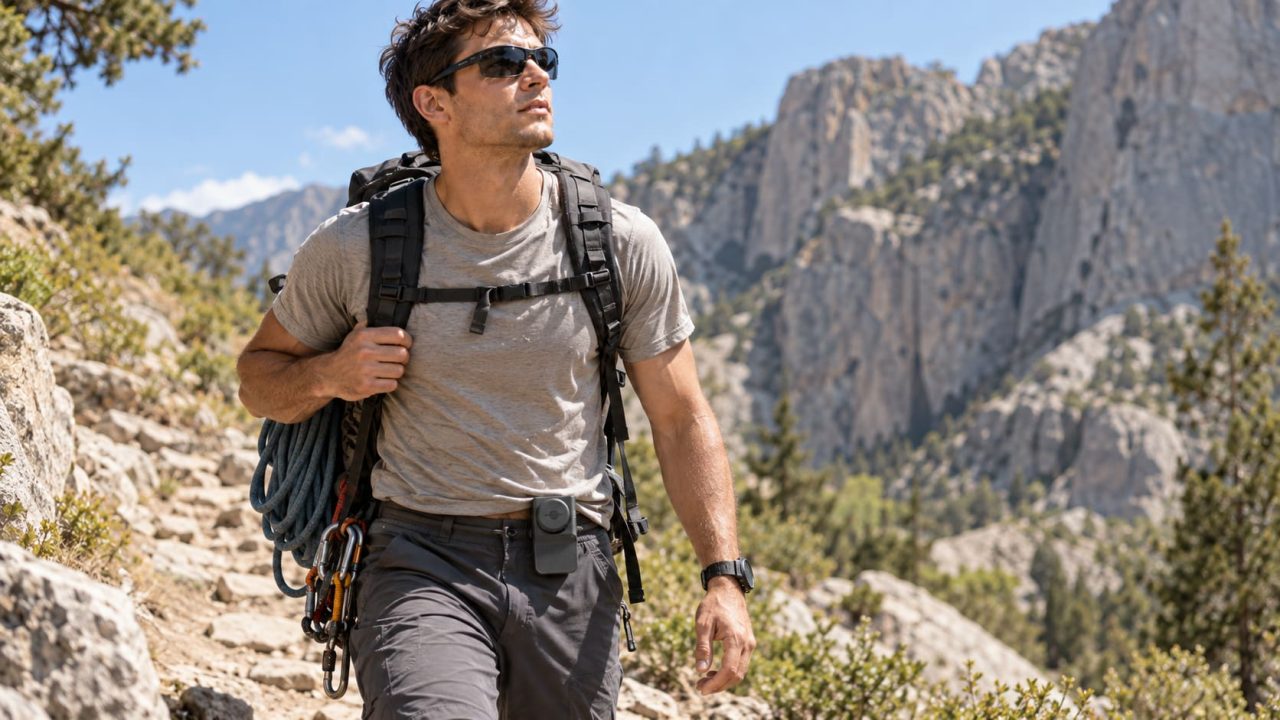
During the Approach and Gear Setup
Getting to a climbing area may involve walking uphill with a pack, rope, water, shoes, and other equipment. Even a relatively short approach can feel uncomfortable in direct sun or warm, humid weather.
A waist fan can be useful during this stage because the airflow follows you instead of requiring you to stop near a stationary fan.
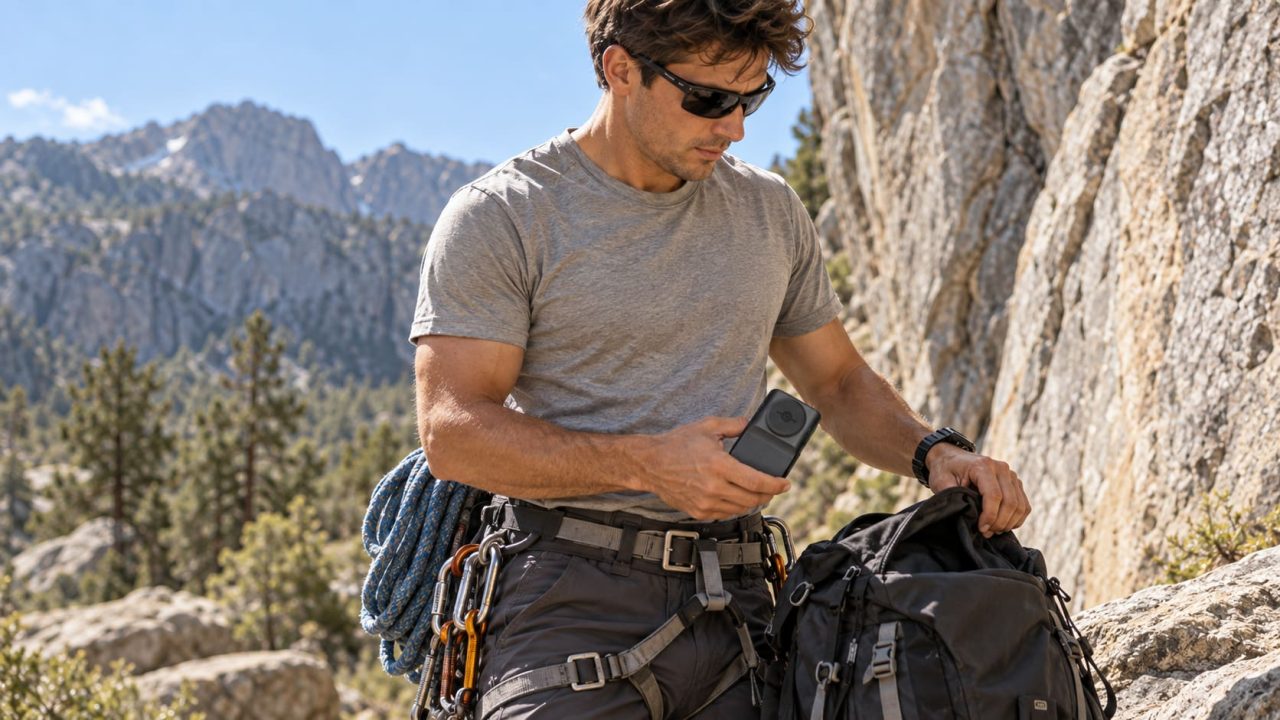
Once you reach the climbing area, both hands are often needed again for unpacking, organizing rope, checking equipment, or changing shoes. A belt fan can continue providing personal airflow while you prepare.
This does not mean it should remain attached when the technical part of the activity begins. Its value here is mainly comfort during preparation.
Using a Waist Fan While Resting Between Climbs
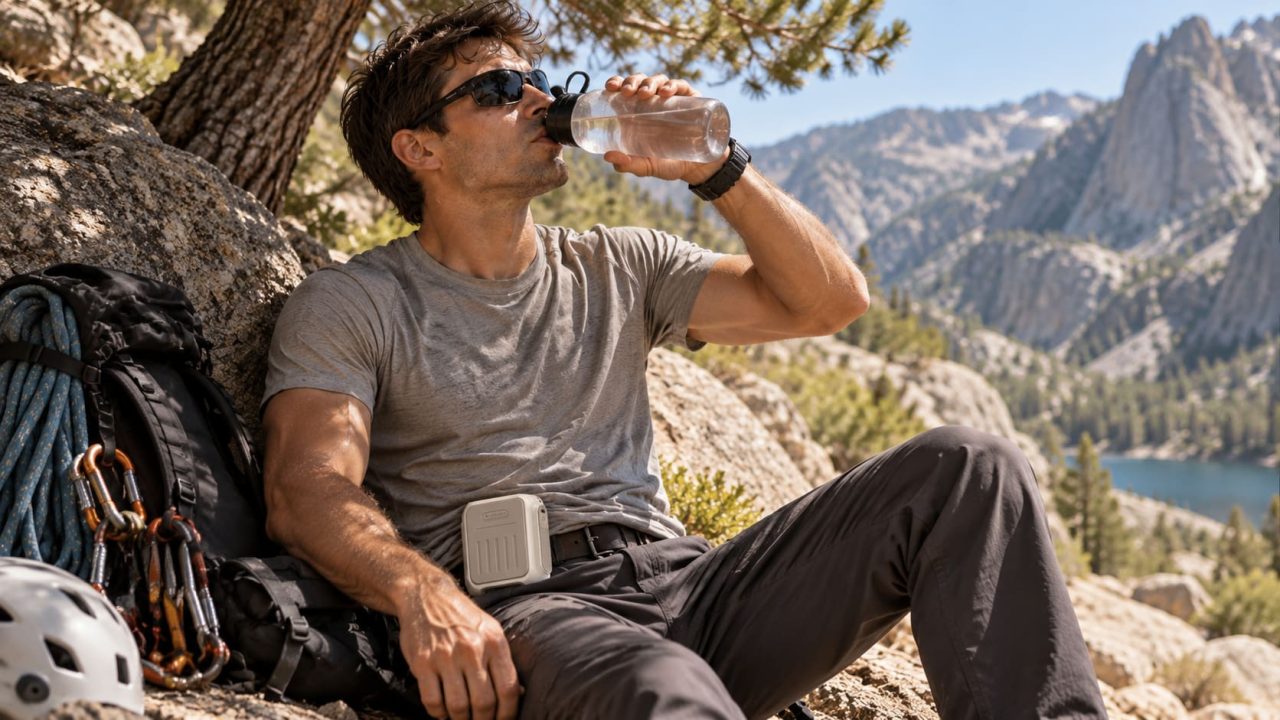
Rest periods are another situation where a waist fan makes sense.
After an attempt, you may spend time sitting in the shade, waiting for another climber, reorganizing equipment, or recovering before the next route.
During these periods, lower or medium fan speeds may already provide enough airflow. Maximum speed is not always necessary, particularly if you expect to use the fan throughout a longer outdoor session.
The goal is simple: use as much airflow as you need for comfort without treating maximum output as the default.
How Should You Use a Hands-Free Waist Fan for Climbing?
A hands free waist fan for climbing should be treated as a comfort accessory rather than part of the climbing system.
Its position matters because backpacks, clothing, and climbing equipment can all occupy the same area around the waist.
Keep the Airflow Path Clear
A waist fan works best when its outlet is not covered.
If a shirt, backpack strap, or other equipment sits directly over the outlet, the fan may still be running at a high setting while very little useful airflow reaches the body.
During rest or gear preparation, clip the fan somewhere secure and make sure air has a clear path upward.
For general outdoor wearing options, WindBillion’s portable waist fan collection shows different wearable cooling designs.
Position It Around a Backpack
A climbing pack may have a hip belt that sits exactly where a waist fan would normally be attached.
Placing the fan underneath a hip belt can block the outlet, create uncomfortable pressure, or make the fan unstable. Rather than forcing both into the same space, move the fan to an unobstructed position or wait until the pack is removed.
At the base of the route, this is usually easier because the backpack may already be on the ground.
Do Not Let It Interfere With a Harness or Rope
Once a climbing harness is involved, safety equipment takes priority.
Do not change the position or fit of a harness simply to make room for a fan. The fan should also stay clear of gear loops, the rope path, carabiners, belay equipment, and other climbing hardware.
If there is no secure position that leaves the climbing system completely unaffected, store the fan.
This is also why a waist fan that works well for walking or resting may not be suitable to keep attached during the climb itself.
If you are comparing cooling styles or expected runtime for a longer outdoor day, WindBillion’s WF01 vs WF04 waist fan comparison explains the differences between the two models.
When Should You Remove the Waist Fan?
A waist fan should come off whenever it becomes another object that could interfere with a safety-critical task.
That is particularly relevant during active climbing, belaying, and rappelling.
Remove or store the fan if it blocks access to the harness, sits near the rope path, contacts climbing hardware, restricts normal movement, or feels insecure enough that it could fall.
The concern is not that airflow itself is a problem. The issue is adding an unnecessary object around an area already occupied by essential climbing equipment.
A practical rule is to use the fan during the non-technical parts of the day and reassess it before any task involving the harness or rope.
An outdoor cooling fan should make the day more comfortable, not add another piece of equipment that requires attention during the climb.
A Waist Fan Does Not Replace Heat-Safety Basics
Personal airflow can improve comfort, but it does not remove the risks associated with exercising in hot conditions.
A climbing day can combine physical exertion, direct sun, dehydration, limited shade, and long periods outdoors. Those factors still need to be managed independently of the fan.
The CDC guidance on heat and athletes recommends pacing activity, drinking more water than usual, choosing cooler times of day when possible, and stopping activity if you feel faint or weak.
Water, shade, rest breaks, suitable clothing, and awareness of heat-related symptoms remain more important than any wearable cooling device.
A waist fan can still be useful on a hot climbing day when it is used at the right time. The approach, gear preparation, rest periods, waiting between attempts, and packing up are all situations where hands-free airflow may make the heat easier to manage.
Once climbing equipment takes priority, the fan should become secondary.
Use it when it adds comfort without affecting the activity, and put it away whenever the harness, rope, or climbing hardware needs the space.