
The ideal indoor humidity in winter depends on your home’s conditions. 30%–50% relative humidity (RH) is a general indoor reference range, but some homes need lower levels during cold spells to limit condensation.
Measure the room with a hygrometer before adding moisture. If the air is consistently dry and surfaces stay dry, consider gradual humidification. If windows become wet, reduce humidifier use and check the cause, even when the meter reads within that range.
What Should Indoor Humidity Be in Winter?
The U.S. Environmental Protection Agency’s moisture-control guidance identifies 30%–50% as the ideal general indoor range. Winter decisions also need to account for cold surfaces.
Window glass can be much colder than room air. Moisture may condense there while a hygrometer elsewhere still shows a moderate reading. Different windows may therefore behave differently at the same room humidity.
Heating also changes relative humidity. When incoming cold air warms without gaining water vapor, its relative humidity falls. Heating does not have to remove water from the air for this to happen.
During cold weather, start toward the lower end of the reference range and watch for condensation. Some homes cannot maintain even 30% without window moisture during severe cold. Investigate those conditions rather than forcing the reading upward.
How Can You Measure Indoor Humidity Accurately?
To find the ideal indoor humidity in winter for your home, start by measuring the room where you spend the most time or notice a problem. One bedroom’s reading does not necessarily represent the entire house.
Place a digital hygrometer away from direct sunlight, heaters, cold window glass, and the humidifier’s mist stream. Follow its instructions and allow the reading to stabilize, especially after moving it.
For a simple home check, keep a morning-and-evening record over two days. Note the humidity, room temperature, humidifier setting, and whether windows are wet. Keep the meter in the same position so the readings are comparable.
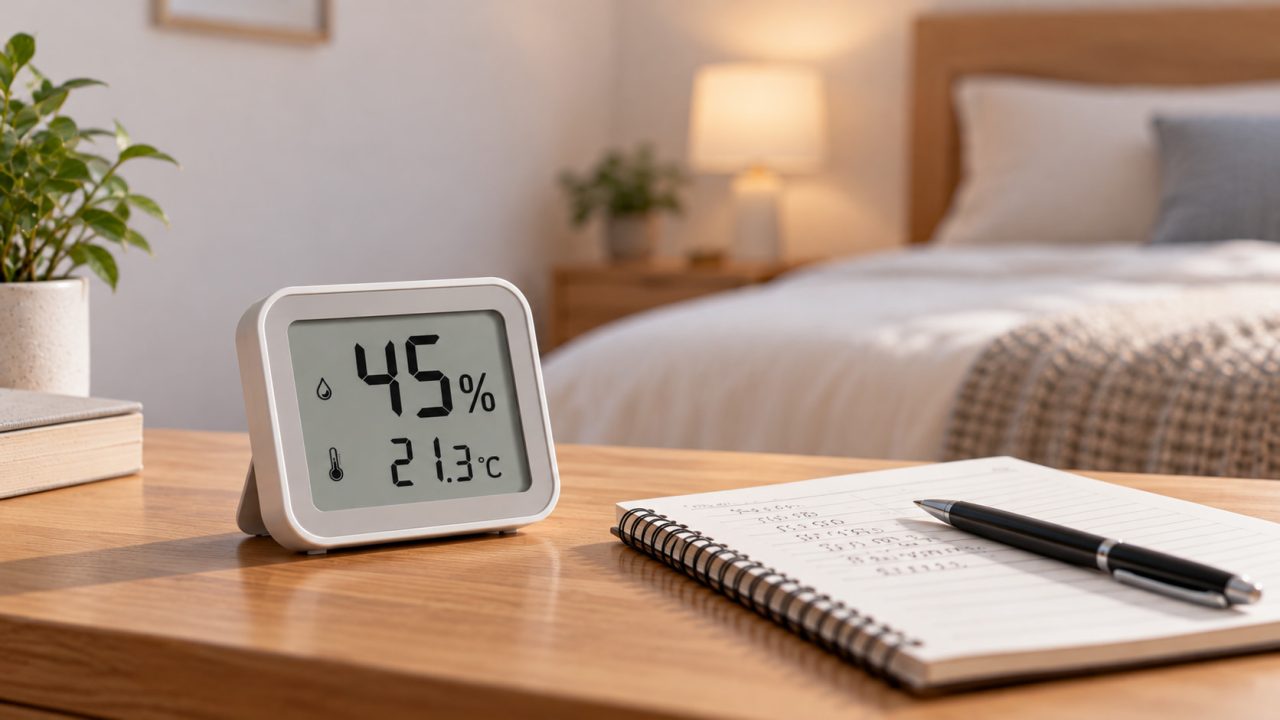
Treat this as a suggested observation routine, not a standardized test. If a reading seems implausible, check the meter’s instructions or compare it with another reliable instrument before making large changes.
How Should You Adjust Indoor Humidity During Winter?
Use the reading and surface conditions together. The table provides practical next steps, not guaranteed settings for every home.
| What You Observe | What to Do Next |
|---|---|
| Consistently below 30%, with dry surfaces | Confirm the reading. Consider gradual humidification if the room is uncomfortably dry. |
| 30%–50%, with dry surfaces | Maintain comfortable conditions instead of adding moisture just to raise the number. |
| Above 50% | Stop adding moisture. If readings stay high, investigate ventilation and moisture sources. |
| Condensation or dampness at any reading | Dry the affected area, reduce humidifier use, and check why moisture is collecting. |
When the Room Needs More Moisture
Start with a low output setting and change one thing at a time. Keep heating and door position reasonably consistent while observing the response. Recheck after the room and meter have had time to respond; a fixed runtime will not suit every space.
Illustrative example, not a product test: Suppose a bedroom starts at 27% RH. After gradual humidification, it reaches 35%, feels comfortable, and the windows remain dry. There is no need to keep increasing humidity to reach 45%. Continue monitoring and reduce output if humidity keeps rising. If window moisture appears at 35%, reduce humidification and investigate instead.
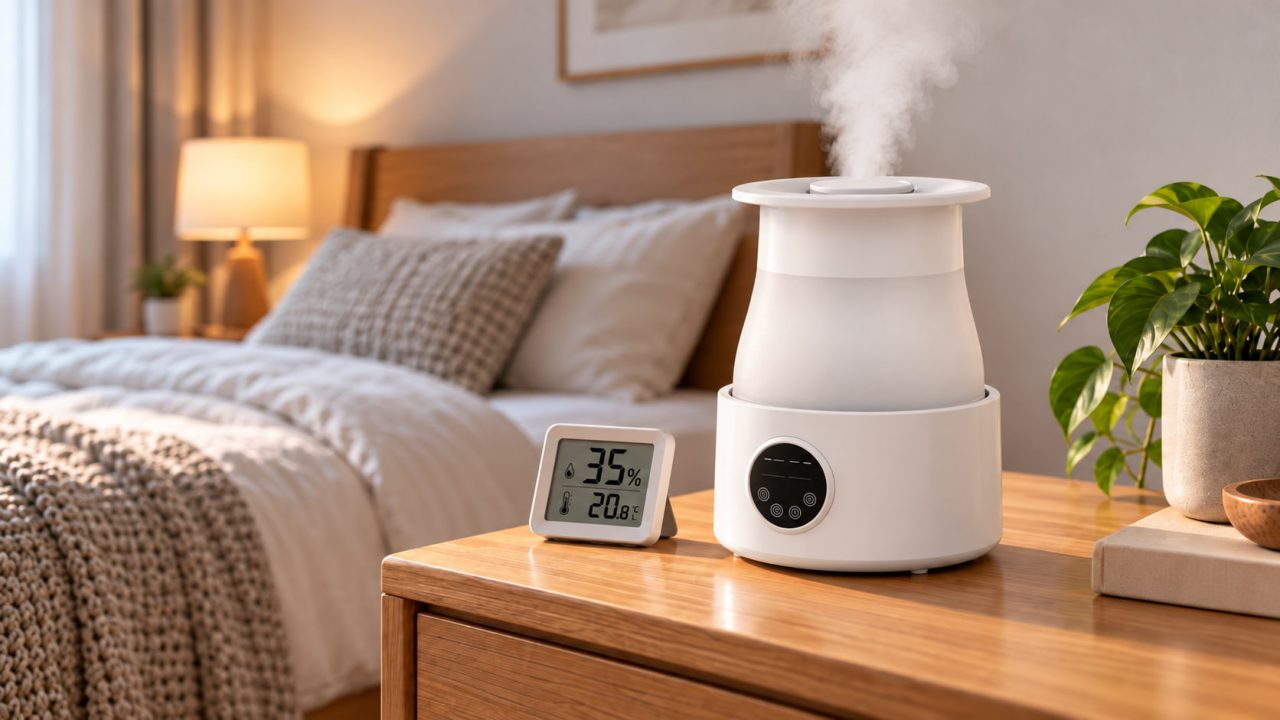
Tank capacity affects refill frequency, while mist settings control output. The WindBillion H50 humidifier has a 4.5 L tank and touch controls for mist adjustment. Use those settings in response to a separate hygrometer reading; adjustable output alone does not guarantee a suitable room humidity.
When Humidity Is Adequate or Too High
If the room is comfortable and surfaces stay dry, extra humidification may be unnecessary. A full tank is not a reason to keep adding moisture.
If high readings persist after the humidifier is switched off, check other sources: showers, cooking, laundry drying indoors, or leaks. Use bathroom and kitchen exhaust fans that vent outdoors during moisture-producing activities.
For daily care, unplug portable humidifiers, empty and dry the tank, and refill with fresh water. EPA recommends cleaning portable units every third day. Follow the manufacturer’s cleaning instructions and rinse away cleaning agents thoroughly.
What Should You Do If Your Windows Start Condensing?
Focus first on moisture on the room-facing glass. A meter across the room does not measure the conditions at every cold surface.
- Dry the glass, frame, and sill. Check later to see whether water returns rather than letting it collect.
- Reduce added moisture. Lower humidifier output or switch it off. Note whether condensation follows humidifier use, cooking, or showers.
- Check ventilation and airflow. Use exhaust fans for moisture-producing activities and allow warm room air to reach the glass instead of trapping cold air behind tightly closed curtains.
If dampness is concentrated around the device, review where to place a humidifier in a bedroom or office. Moving it may reduce local wetting, but it will not solve excessive humidity throughout the room.
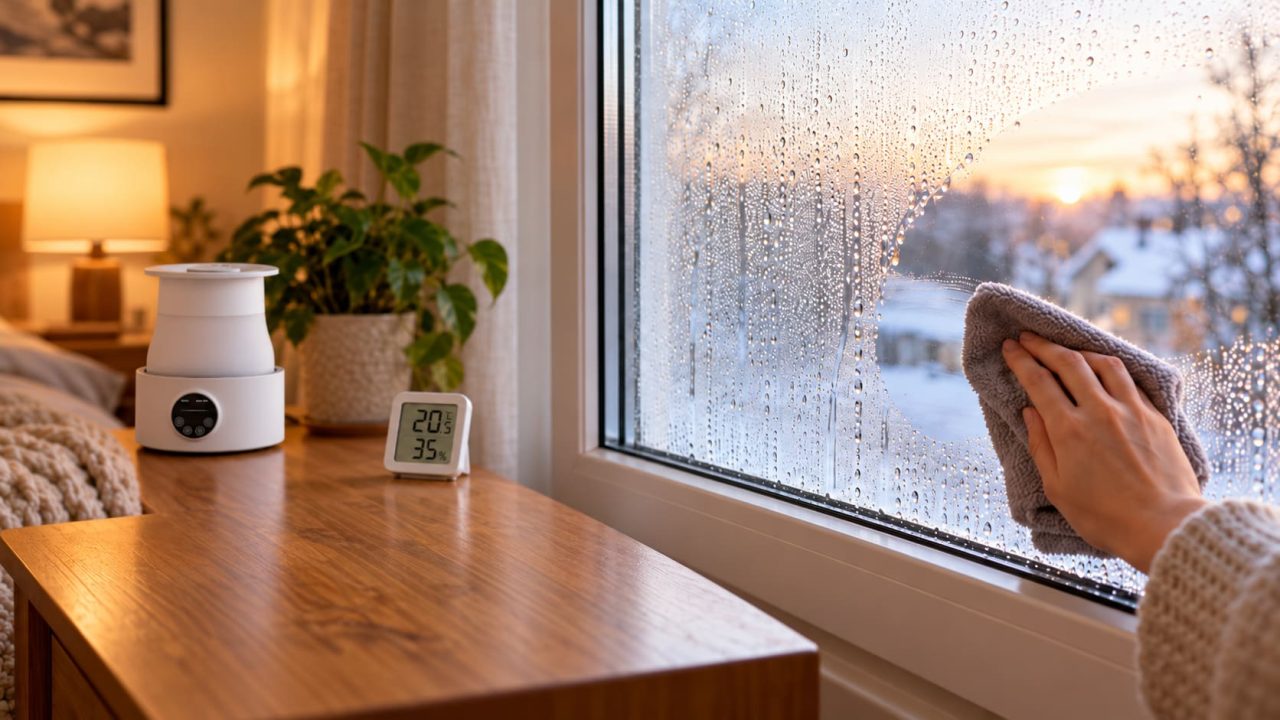
If condensation keeps returning with the humidifier off, investigate ventilation, cold surfaces, and possible leaks. Recurring wet walls, damaged finishes, or musty odors warrant attention to the underlying moisture problem. Ask your landlord or a qualified building professional for help when the cause is unclear.
Adjust Winter Humidity as Conditions Change
Use your room’s humidity reading and the condition of windows and nearby surfaces to guide each adjustment. The ideal indoor humidity in winter is not one fixed number for every home. If the room is comfortable and surfaces remain dry, there is no need to keep adding moisture simply to reach a higher percentage.
Check again when colder weather arrives. Reduce humidifier output if condensation develops, and investigate dampness that keeps returning. Make one change at a time, then check how the room responds.