
Outdoor events often require hours of work before the audience arrives. Stage and event crews may unload equipment, move lighting cases, organize cable runs, position speakers, set up barriers, prepare backstage areas, and move repeatedly between different parts of the venue.
A waist fan for outdoor work can provide personal airflow during these tasks while keeping both hands available for carrying equipment, handling cables, and completing setup work.
It is most useful during ground-level tasks where it can be worn securely without interfering with tools, lifting, PPE, or safety equipment.
Why Can a Waist Fan Be Useful During Stage Setup?
Outdoor event work is different from staying at one workstation.
Crew members may start at the loading area, move to the stage, return backstage for equipment, and then head to another part of the venue to finish cables, signage, barriers, or lighting preparation.
A stationary fan can help in one location, but it cannot follow someone through that workflow.
A portable waist fan moves with the worker, which can make it more practical during setup jobs that involve frequent movement.
During Load-In and Equipment Preparation
Load-in often means moving equipment from trucks or storage areas toward the stage.
That may include:
- speaker and lighting cases;
- cable reels;
- barriers and signs;
- toolboxes;
- stands and small stage equipment;
- backstage supplies.
Most of these tasks require both hands. Holding a personal fan while carrying or organizing equipment is not realistic.
Hands-free airflow can be more useful during lighter ground-level work such as sorting cases, preparing cables, checking equipment, or organizing the stage-side area.
For heavier lifting, the fan should only remain attached if it does not restrict movement or interfere with the task.
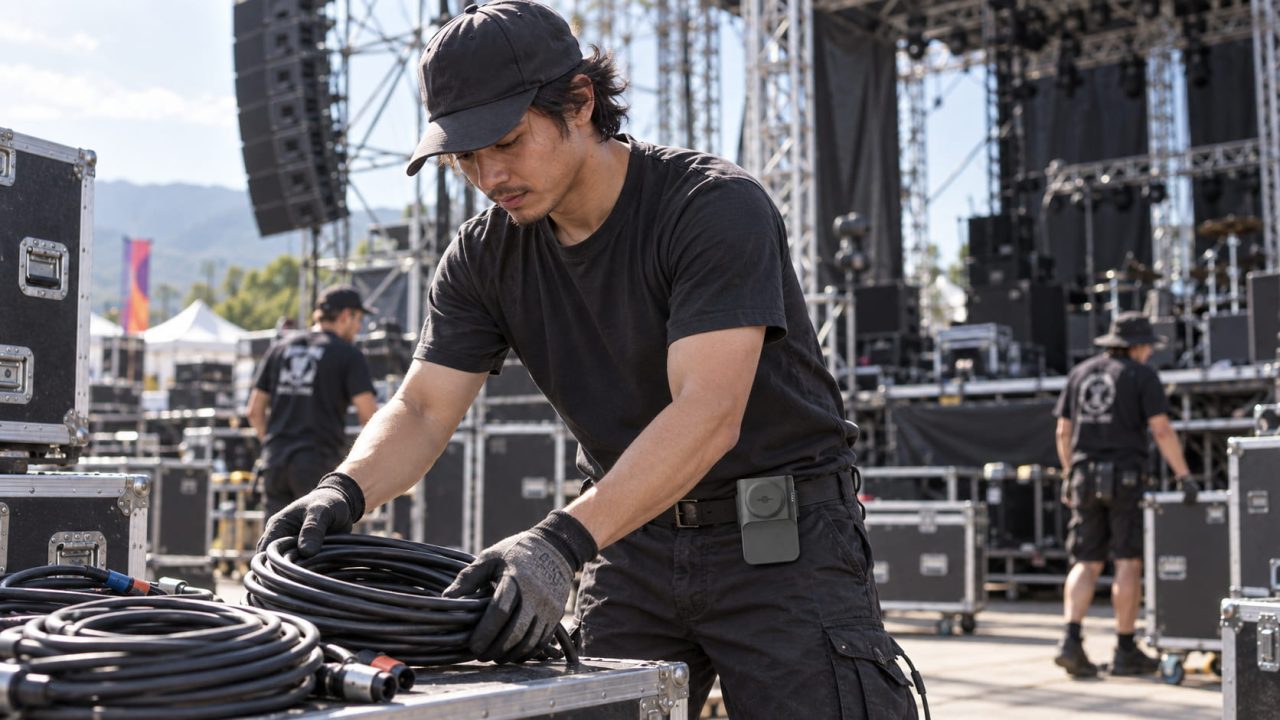
Moving Between Stage, Backstage, and Loading Areas
Event crews rarely stay in one place.
Someone may spend part of the morning near the loading dock, then move stage-side to organize cables, walk backstage for additional equipment, and later help with barriers or signage.
A waist fan for outdoor workers can provide airflow during these transitions without depending on a nearby table, outlet, or cooling station.
That is one of the clearest advantages of wearable cooling in an event environment: the airflow moves with the person rather than staying in one work zone.
How Should Stage Crews Use a Waist Fan for Outdoor Work?
The best position depends on what else the worker is carrying.
Stage crews may already be wearing radios, utility pouches, work gloves, safety vests, or tool belts. The fan needs to fit around that equipment rather than compete with it.
Keep It Clear of Tools and Equipment
The fan should sit in a position where it remains secure and does not block access to tools or restrict normal movement.
A shirt or utility pouch can also cover the air outlet. If airflow suddenly feels weak, check the fan’s position before simply increasing the speed.
For other hands-free cooling options, you can also compare WindBillion’s waist fan collection.
Adjust the Position as the Job Changes
Stage setup involves a lot of standing, walking, bending, carrying, and working beside equipment cases.
WF04 uses a rotating clip, so the airflow direction can be adjusted when the wearer’s position changes.
That can be useful during cable preparation, stage-side organization, equipment checks, or other ground-level jobs where the worker may move between standing and crouching positions.
The fan should not require a worker to move a tool pouch, loosen protective equipment, or change the normal position of work gear just to keep it attached.
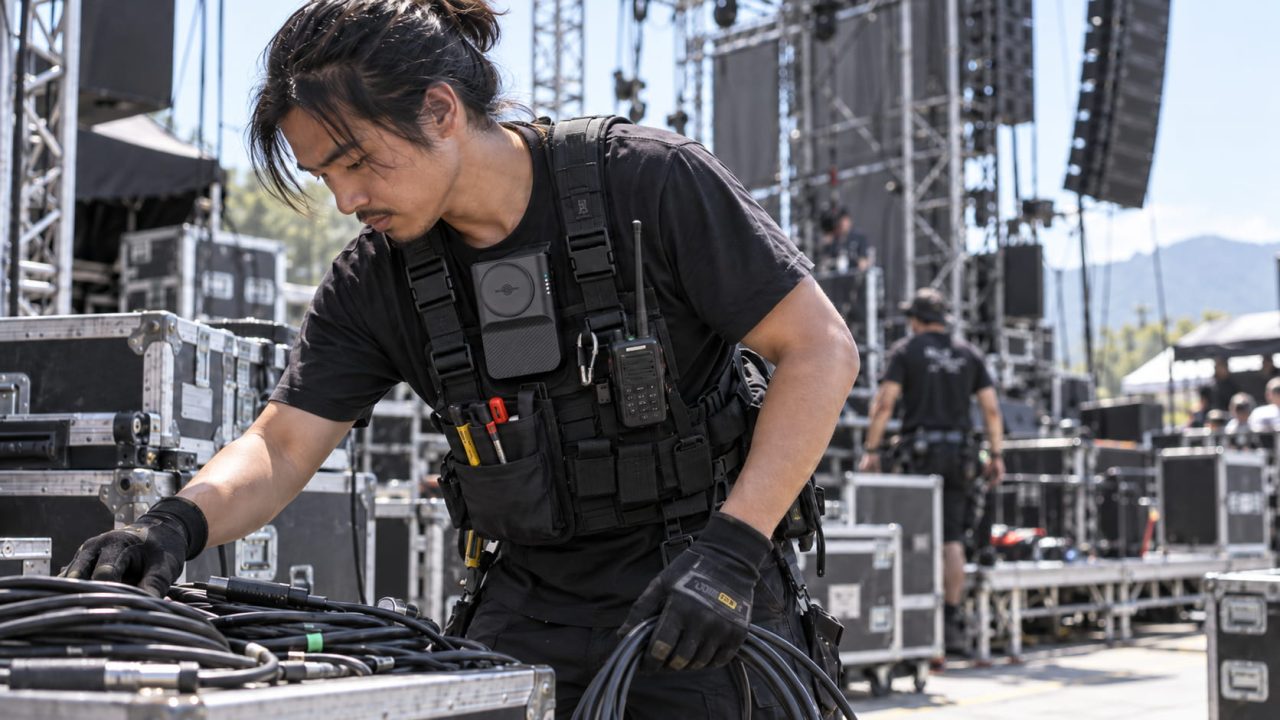
Remove It When the Task Becomes Safety-Critical
Some event work goes beyond ordinary ground-level setup.
Remove the fan if it could interfere while:
- climbing stage structures;
- working at height;
- wearing a safety harness;
- rigging lighting or suspended equipment;
- handling heavy or awkward loads;
- working close to moving equipment.
If the fan becomes another object that needs to be managed during a safety-critical task, store it until that job is finished.
When Does WF04 Fit Best Into an Outdoor Event Workday?
WF04 makes the most sense during the parts of the day where hands-free cooling adds comfort without getting in the way of the work.
During Ground-Level Setup and Load-In
Cable runs, case organization, signage, barrier setup, equipment checks, backstage preparation, and stage-side organization are all examples of work where a waist fan for outdoor work can be practical.
These tasks often involve movement and both hands, but they do not always require climbing or a safety harness.
That makes them a more natural fit for wearable airflow.
During Breaks and Teardown
Cooling needs can change during a long event day.
WF04 also includes an ice plate for brief direct-contact cooling. The ice plate works only while the fan is running, with the fan operating at Speed 1 or Speed 2. The cooling function then switches off automatically after about 10 minutes.
That makes the ice plate more suitable as an additional cooling option during a short break rather than something a worker depends on continuously while moving equipment.
After the event, teardown can involve collecting cables, packing lighting and audio gear, removing signs and barriers, and loading equipment back into vehicles.
f the weather is still warm, a waist fan for outdoor work can provide airflow as the crew packs up and moves equipment back into storage.
If you want to compare the two WindBillion waist fan designs, the WF01 vs WF04 comparison explains how their cooling approaches differ.
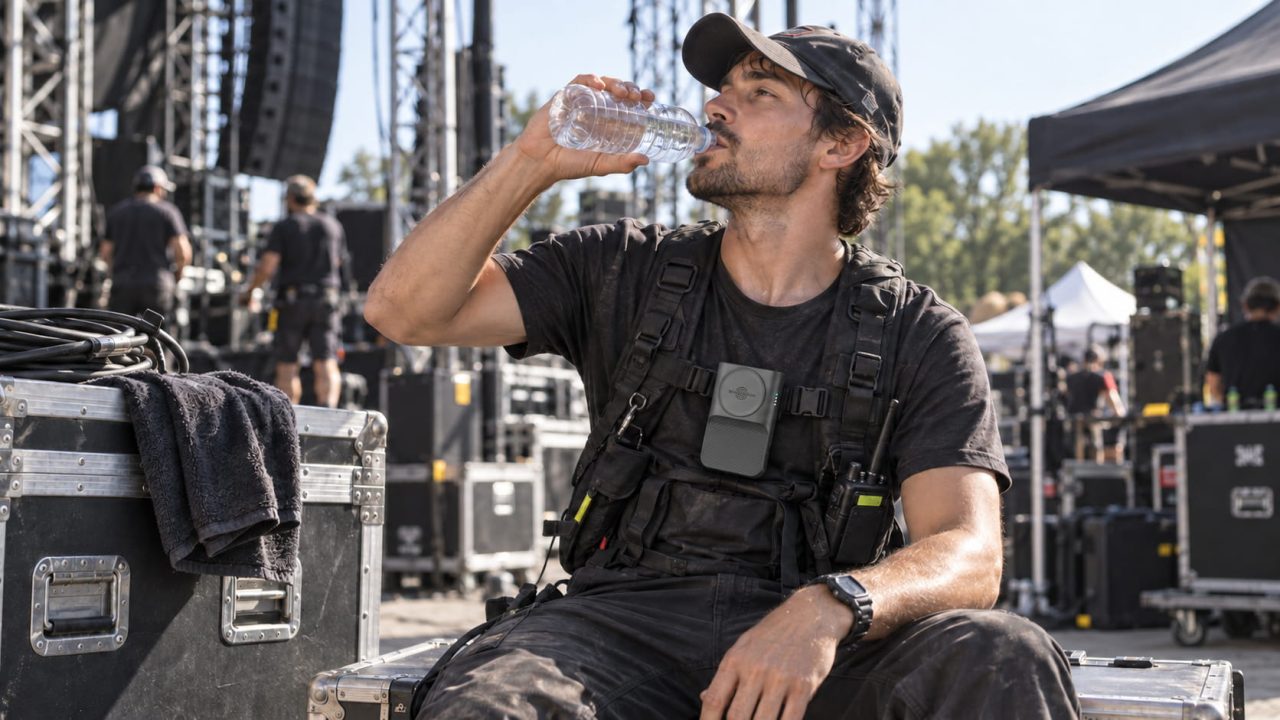
A Waist Fan Does Not Replace Heat-Safety Basics
An outdoor cooling fan can improve personal comfort, but it does not remove the risks of working for long periods in hot weather.
Outdoor stage and event crews still need access to water, shade, appropriate rest periods, and work practices that account for heat exposure.
OSHA recommends providing workers exposed to heat with water, rest, and shade, while also watching for signs of heat-related illness.
You can refer to the OSHA guidance on preventing heat illness for more detailed heat-safety information.
For event crews, a waist fan is most useful during load-in, ground-level setup, movement between work areas, short breaks, and teardown.
If it begins to interfere with tools, lifting, climbing, PPE, or safety equipment, remove it before continuing the task.