Newer personal cooling devices can be worn around the neck, clipped to a waistband, or combined with mist and direct-contact cooling. These designs keep cooling close to the user while allowing more freedom of movement.
Hot weather is adding to that interest in 2026. The World Meteorological Organization’s August–October seasonal outlook expects above-normal temperatures across much of the world as a strong El Niño develops, keeping portable cooling especially relevant during travel, commuting, outdoor activities, and other times away from full-room cooling.
What is changing most, however, is the technology itself. Wearable cooling is becoming more focused on mobility, adjustable comfort, and giving users greater control over how cooling is delivered.
Why Is Personal Cooling Getting More Attention in 2026?
Traditional room cooling and personal cooling solve different problems.
Air conditioning changes the temperature of an indoor space. A personal device concentrates cooling closer to one person, making it useful when full-room cooling is unavailable, unnecessary, or simply not following you throughout the day.
Hot Conditions Keep Personal Cooling Relevant
The World Meteorological Organization’s latest seasonal outlook expects above-normal temperatures across much of the world during August–October 2026.
That does not make a portable fan a substitute for air conditioning, shade, hydration, or proper heat-safety measures. It does help explain why products that provide targeted airflow or cooling continue to have a clear role during hot-weather routines.
Cooling Is Becoming More Mobile
People rarely stay in one thermal environment all day.
A commute may begin in an air-conditioned building, continue through a hot street or station, and end in another indoor space. Outdoor work, travel, events, and errands create similar transitions.
That makes mobility increasingly important. A cooling product designed around the user can move with them instead of remaining on a desk or floor.

What Is a Wearable Cooling Device?
A wearable cooling device is a portable product designed to provide personal cooling while being worn on or attached close to the body.
A portable waist fan is one example, alongside neck fans, clip-on designs, cooling plates, and hybrid products that combine several methods.
The key difference is not simply size.
A handheld fan may be very compact, but it still occupies one hand. A wearable product changes the way cooling fits into everyday movement because the airflow or cooling surface can stay closer to the user without being continuously held.
This is why wearable cooling is developing into a category of its own rather than simply another name for a mini fan.
How Is Wearable Cooling Technology Changing?
Airflow remains the foundation of many portable cooling products, but it is no longer the only approach being used.
Current designs increasingly combine several methods, each of which changes the cooling experience in a different way.
Hands-Free Airflow
A neck- or waist-mounted fan can keep airflow close to the body while leaving both hands available.
This does not automatically make it more powerful than a handheld fan. Its advantage is positioning. When airflow remains directed toward the user while they move, they do not need to keep adjusting the fan by hand.
Mist Adds Evaporative Cooling
Misting designs introduce fine water droplets into moving air.
The effect is different from simply increasing fan speed because evaporation adds another cooling mechanism. How noticeable that effect feels can vary with environmental conditions, particularly humidity.
This is one reason misting products occupy a different part of the personal cooling category from basic airflow-only fans.
Cooling Plates Add Direct Contact
A cooling plate works differently again.
Rather than trying to cool a wider area of surrounding air, it provides a concentrated cold sensation where the surface contacts the body.
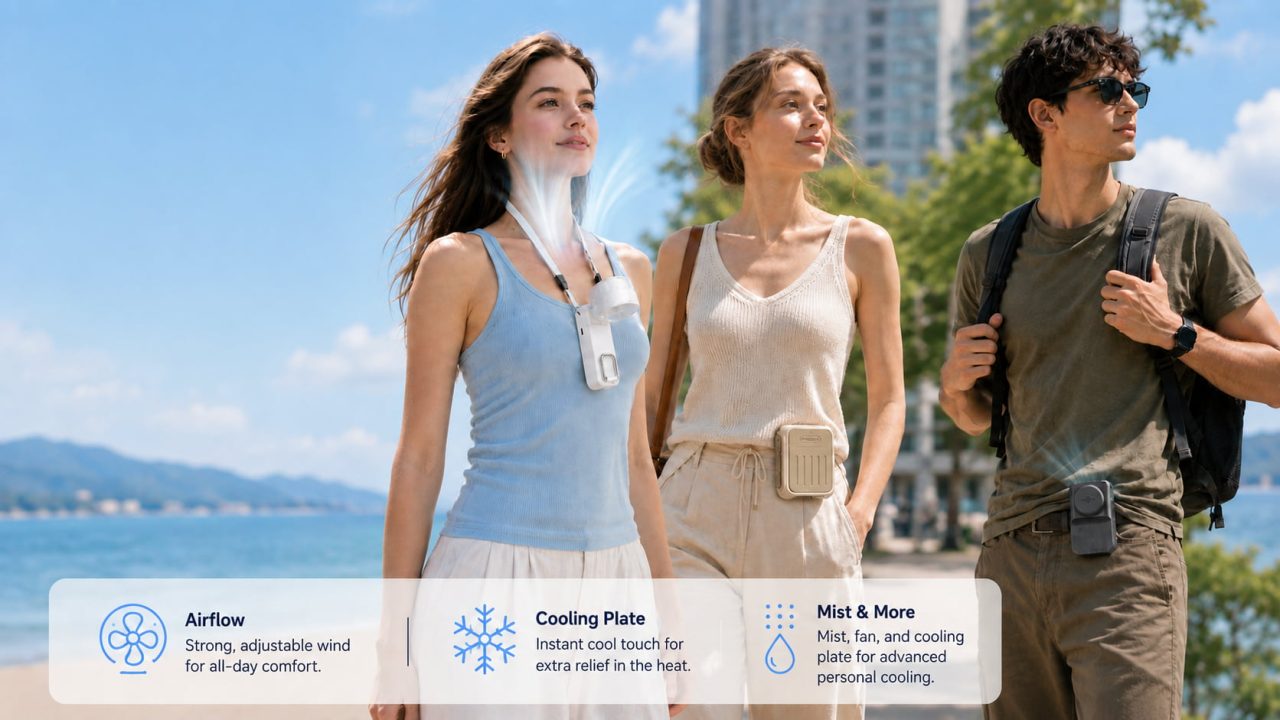
Airflow, mist, and contact cooling therefore should not be treated as interchangeable features. They solve slightly different comfort needs, which is why some newer devices combine more than one method.
Why Does Hands-Free Design Matter?
Wearability is useful because it changes where the cooling stays while the user is moving.
The question becomes less about whether a fan can produce strong airflow and more about whether that airflow reaches the right place without demanding constant attention.
Placement Can Matter as Much as Power
A powerful fan is not particularly useful if most of the airflow misses the user.
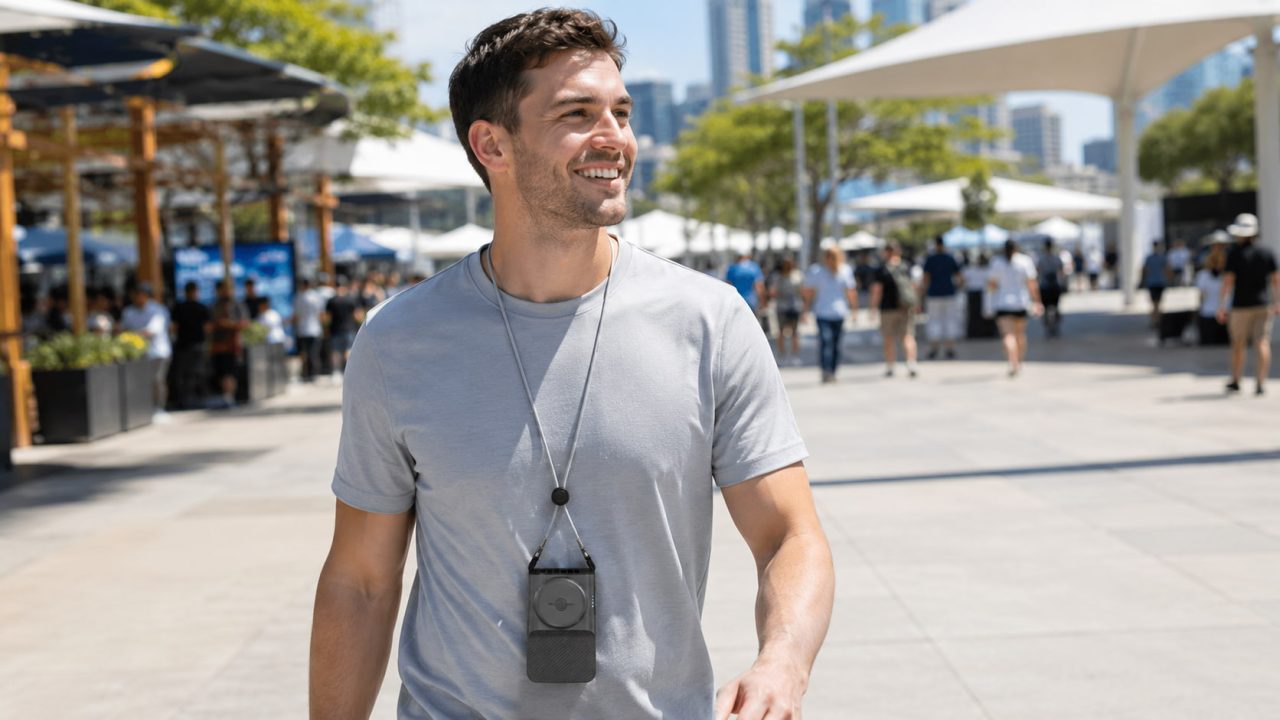
Waist-mounted designs can direct air upward toward the body, while neck-worn products keep cooling closer to the face and upper body.
In practice, a well-positioned lower setting may sometimes feel more useful than a stronger setting aimed in the wrong direction.
Cooling Can Continue While You Move
Hands-free use also removes the need to carry a fan continuously.
That matters when someone is already holding a phone, bag, tools, luggage, or other items. The cooling device becomes part of what they are wearing rather than another object they need to manage.
This shift from “hold the fan” to “wear the cooling” is one of the clearest differences between traditional portable fans and newer wearable designs.
Battery Life Matters More for Daily Use
For a wearable cooling device, mobility creates another expectation: enough battery power to remain useful away from a wall outlet.
But battery capacity alone is not a reliable way to compare every cooling product.
Runtime Depends on the Cooling Mode
Fan speed affects power use, and additional active features can change it further.
A fan running at a gentle setting does not necessarily consume power at the same rate as a device running high airflow together with a cooling plate or mist system.
For users, this makes adjustable modes important. The useful question is not only “How large is the battery?” but also “How long will it run in the mode I actually use?”
Rechargeable Power Fits Repeated Use
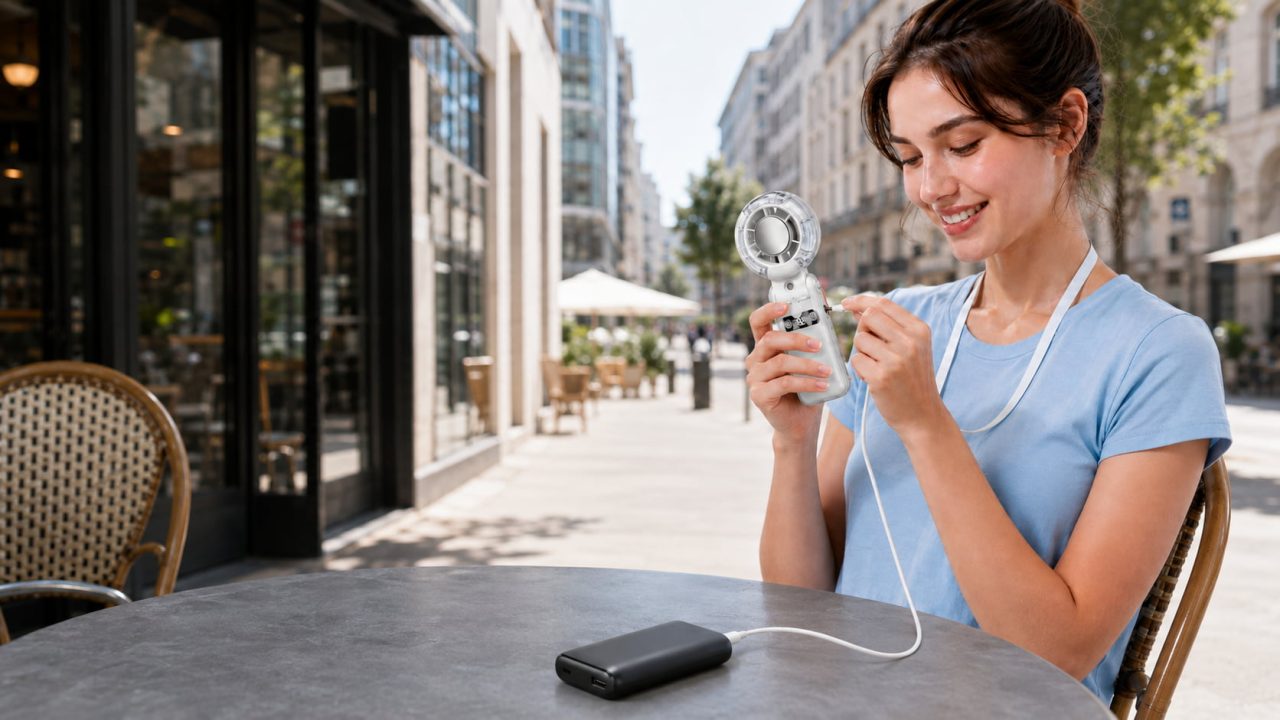
Wearable cooling is increasingly designed around rechargeable batteries and Type-C charging.
That suits a product intended for repeated use: charge it between outings, use a lower setting when less cooling is needed, and save higher-power functions for situations where they provide a noticeable benefit.
As these devices move closer to everyday-use electronics, convenient charging becomes part of the experience rather than an optional extra.
What Do Users Expect From Personal Cooling in 2026?
More features do not automatically create a better wearable cooling device or a better personal cooling experience.
What matters is whether the design remains practical enough to wear, carry, control, and recharge during real use.
Comfortable Weight and Fit
Battery size, motors, water tanks, and cooling components all add weight.
A product designed to be worn therefore has to balance added features against comfort. A device may look compact on a specification sheet but still feel very different after extended use.
More Control Over Cooling
Users also have more reasons to expect adjustable cooling rather than one fixed output.
Fan speed, mist output, clip angle, wearing position, or active cooling functions allow the device to adapt when conditions change.
The goal is not necessarily to run every feature at maximum. It is to have enough control to use only what is useful at that moment.
Practical Design Matters More With Daily Use
Small details become more important when a product is used repeatedly.
Clips need to hold their position, controls should be easy to reach, charging should be straightforward, and wearable parts should not make the device unnecessarily awkward.
That is where the difference between a novelty summer gadget and a useful everyday device becomes clearer.
How WindBillion Fits Into the Wearable Cooling Trend?
WindBillion currently approaches personal cooling through several different wearable designs rather than trying to make one product solve every problem.
WF01 Focuses on Hands-Free Airflow
The WindBillion WF01 Waist Fan takes the simplest approach.
It clips at the waist, provides four adjustable airflow settings, and uses a 9800mAh rechargeable battery. At the lowest setting, the current product specification lists up to 28 hours of runtime.
Its role in this trend is straightforward: long-lasting, hands-free airflow without adding mist or a contact-cooling system.
WF04 Adds Direct-Contact Cooling
The WindBillion WF04 Ice Plate Waist Fan combines upward airflow with a front cooling plate.
It also adds a 360° rotating clip and a 90° fold-out stand, so the same device can shift between wearable and desktop positioning.
The current WF04 product specification lists four fan speeds, a 5000mAh battery, and up to 34 hours of fan-only runtime on the lowest setting. The cooling plate works while the fan is running rather than as a separate standalone mode.
FB23 Combines Three Cooling Methods
The FB23 Neck-Wearable Cooling Mist Fan moves further into multi-function cooling.
It combines fan airflow, a cooling plate, and fine mist in one product, with 100 levels of fan adjustment and a 35ml water tank. It can also switch between neck-wearable, handheld, and desktop use.
Together, these products show why the wearable category is becoming broader: some users may only need hands-free airflow, while others may value direct cooling, mist, or more flexible positioning.
Wearable Cooling Is Becoming More Than a Summer Gadget
The growing interest in wearable cooling is not simply about putting a smaller fan around someone’s neck.
The category is changing because personal cooling is becoming more adaptable. Airflow can follow the user, mist can add another cooling method, contact plates can target a smaller area, and rechargeable power makes repeated use more practical.
A wearable cooling device still has clear limits. It cannot replace appropriate heat precautions or cool an entire room.
What it can do is give one person more control over where, when, and how cooling is delivered.
That shift—from carrying a fan to wearing a more adaptable personal cooling system—is what makes wearable cooling a noteworthy consumer trend in 2026.