
Can a Portable Camping Fan Last Through a Three-Day Camping Trip?
Table of Contents
A three-day camping trip does not mean a fan must operate for 72 continuous hours. Most campers need airflow during the hottest afternoon periods, while resting at the campsite, and for a few hours after getting into the tent.
A Portable Camping Fan can remain useful throughout a three-day trip, but it may not last the entire trip without recharging if it is used continuously or kept at a high speed. The WindBillion H12 has a 7,800mAh battery that provides approximately 9–31 hours of use, depending on the selected settings.
The key is deciding when airflow provides the most value. Saving stronger speeds for peak heat, using lower airflow at night, and checking the battery level each day can prevent most of the available power from being used too early.
What Does a 9–31-Hour Runtime Mean for a Portable Camping Fan?
The H12 provides approximately 31, 22, 11, or 9 hours of runtime across its four fan-speed settings. This does not mean the fan will operate continuously for three full days, because total battery life also depends on LED use, timer settings, and how often the device is switched off.
A camper who uses the fan for three hours in the afternoon and three hours around bedtime would need approximately 18 hours of airflow across three days. In this type of schedule, the lower fan speeds are the most practical: the H12 is rated for approximately 31 hours on the lowest setting and 22 hours on the second setting, while the higher settings provide approximately 11 and 9 hours.
By comparison, a Camping Tent Fan that runs throughout the afternoon, evening, and entire night will use its battery much faster. It may need to be recharged before the trip ends.

Why Can a Camping Fan Battery Drop Faster Than Expected?
Keeping the fan at a high speed for long periods is one of the main reasons the battery may fall faster than expected. Strong airflow can be useful after hiking or while setting up camp, but it may not be necessary once you have cooled down.
The LED light also uses part of the available battery. Leaving it on when another lantern is already lighting the campsite, or keeping it illuminated after everyone is asleep, can reduce the remaining fan runtime.
Starting the trip with a partial charge, forgetting to turn the fan off, or running it overnight without a timer may also leave too little power for the following day.
Which Camping Moments Use the Most Battery?
Battery demand changes throughout the day. Identifying the warmest and most active periods makes it easier to reserve stronger airflow for the times when it is most useful.
During Arrival and Tent Setup
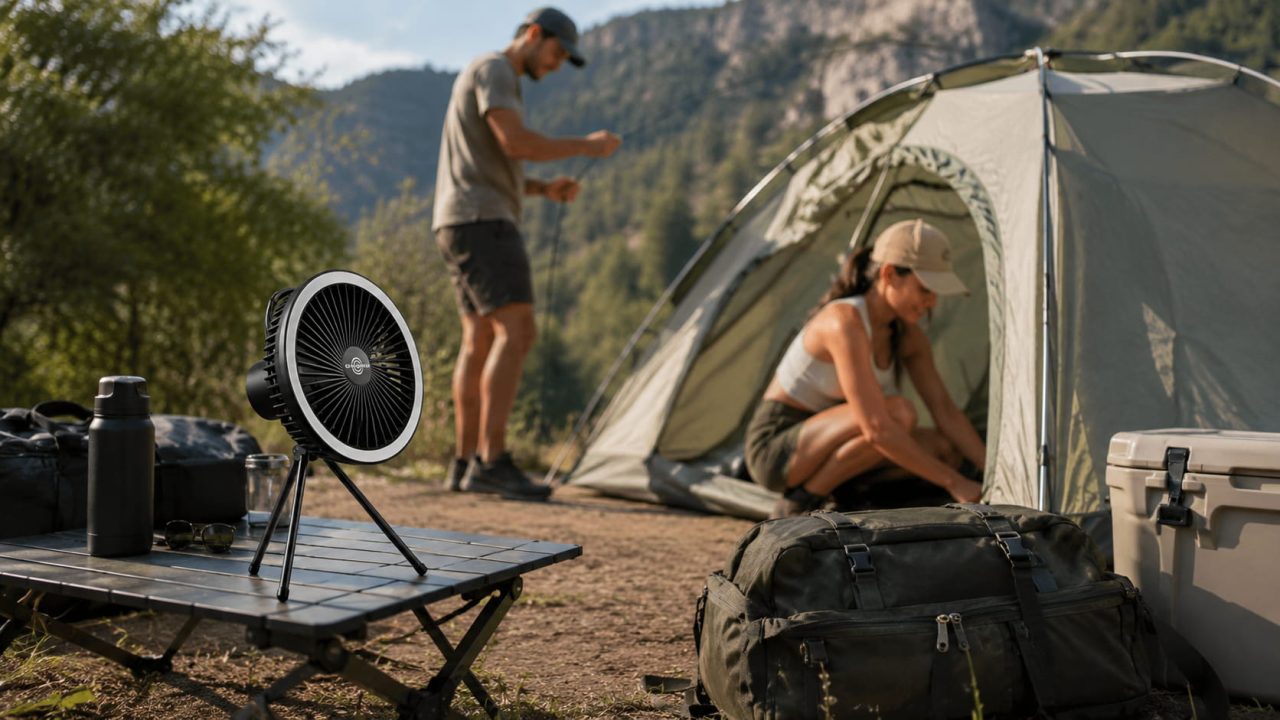
Unloading equipment and pitching a tent can feel hot, especially at a campsite with limited shade. A higher speed may be useful during short rest breaks while you are setting up.
The fan does not need to run continuously while everyone is carrying equipment or moving between the vehicle and campsite. Once setup is complete, reduce the speed or switch it off until someone is sitting nearby.
During the Hottest Afternoon Hours
Midday and late afternoon may be the most useful times for moderate or stronger airflow. Run the Portable Camping Fan while resting, eating, or recovering from an outdoor activity.
When everyone leaves the campsite for a walk, hike, or swim, turn the fan off rather than leaving it operating inside an empty tent.
At Bedtime
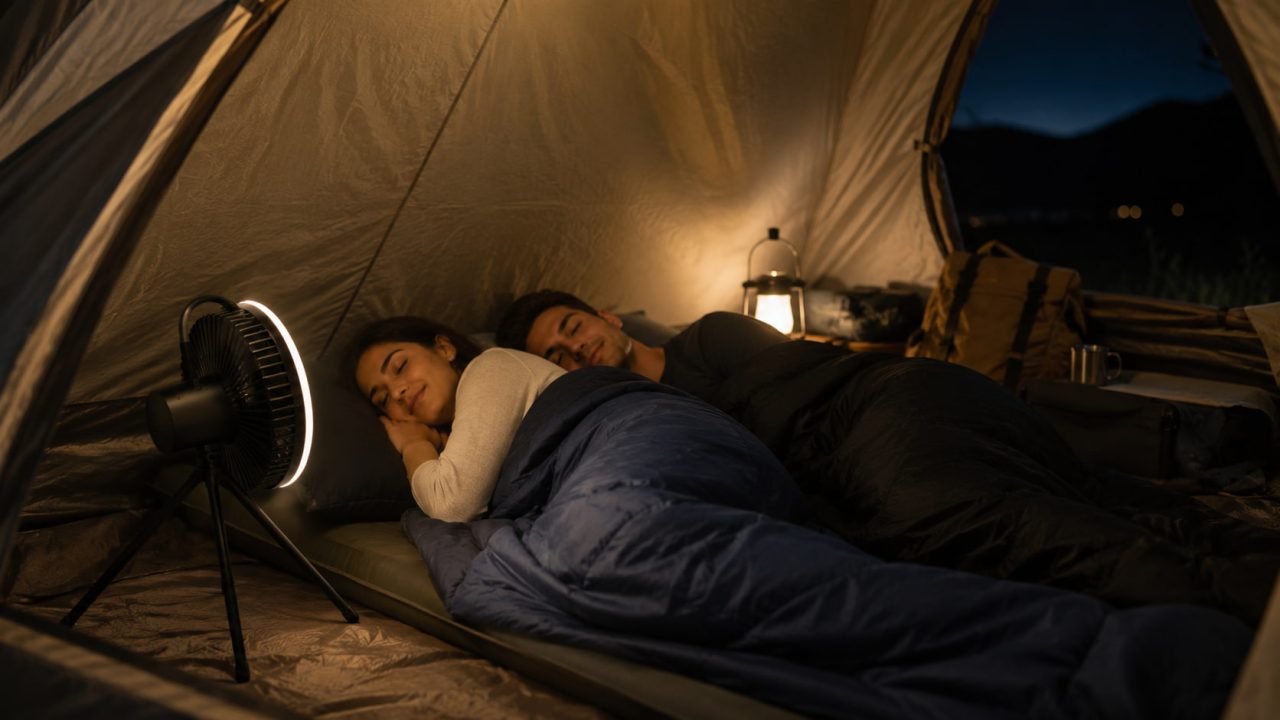
Lower airflow is often more comfortable once you are lying down. Aim the fan across the sleeping area instead of directing strong airflow continuously at your face.
The LED light can help while arranging sleeping bags or looking for equipment. Once everyone is settled, turn off the light and use the timer to control how long the fan continues running.
Can the Timer Help a Camping Fan Last Longer?
The H12 includes one-, two-, three-, and four-hour timer settings. This allows the fan to provide airflow while you fall asleep and then turn off automatically.
A one- or two-hour setting may be enough when the temperature usually falls after sunset. A longer setting may be more useful when warm and humid conditions continue into the night.
The timer does not increase the battery capacity. Its benefit is preventing the fan from operating for several unnecessary hours after you have fallen asleep, preserving more power for the next afternoon or evening.
When Should a Rechargeable Camping Fan Be Recharged?
Charge the Rechargeable Camping Fan fully before leaving home. The H12 takes approximately four to six hours to charge through its USB-A-to-Type-C connection, so it is better to include charging in your trip preparation rather than leave it until departure time.
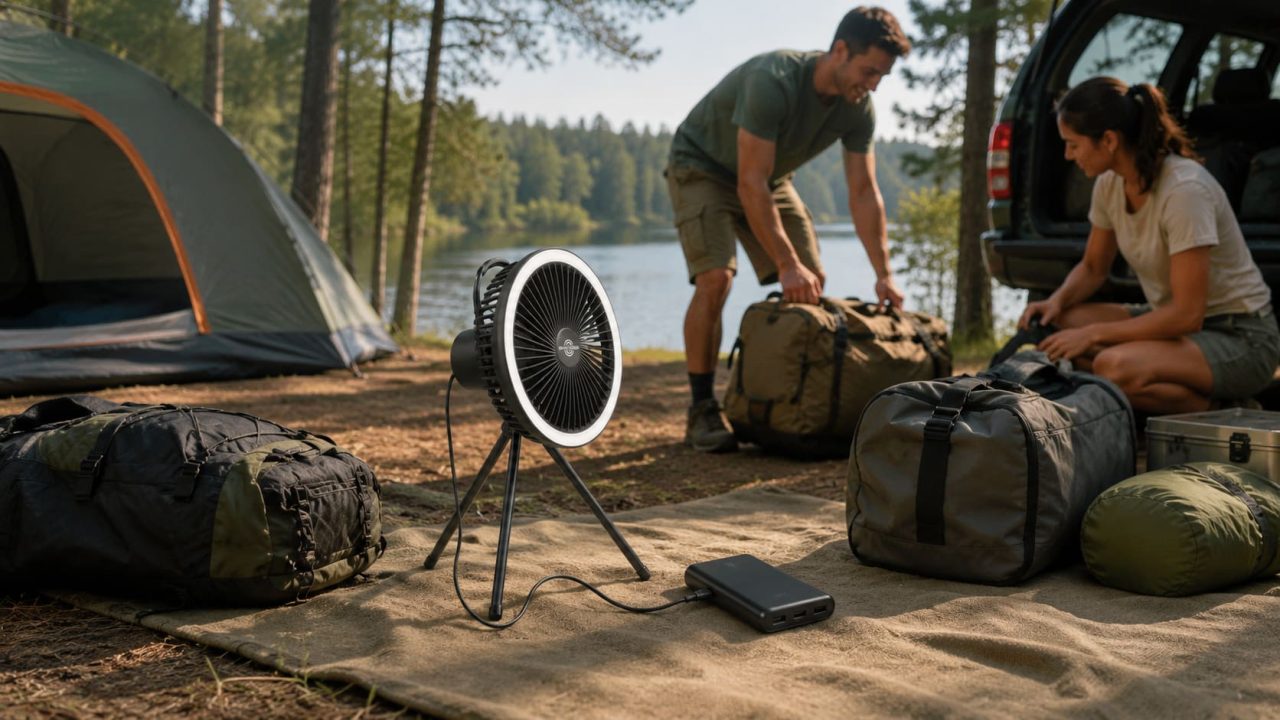
During the trip, recharge when a dependable and compatible USB power source is available. This may include a suitable power bank, a compatible vehicle USB connection, or a campsite electrical hookup used with the appropriate charging adapter.
Check the battery display before leaving the campsite for several hours and again before bedtime. Recharging during the day is more convenient than discovering at night that there is not enough power for comfortable airflow.
What Could a Three-Day Battery Plan Look Like?
There is no single schedule that suits every campsite or weather condition. A simple plan can still help prevent the highest fan speeds and LED light from using most of the battery on the first day.
Before deciding how much battery to reserve for each day, check the expected weather and campsite conditions. Hotter afternoons may require more fan use, while cooler evenings may allow you to shorten the timer or turn the fan off earlier.
Day One: Avoid Continuous Use
Use moderate or stronger airflow during short breaks while setting up the campsite. Turn the fan off while hiking, exploring, or eating away from the tent.
At bedtime, select a lower speed and use a one- or two-hour timer. Turn on the LED only while arranging equipment or preparing the sleeping area.
Day Two: Prioritize Peak Heat
Leave the fan off during a cool morning and save more of the battery for the warmest afternoon period.
Check the battery display before evening. Recharge when a compatible source is available. Without access to charging, reduce unnecessary LED use and choose a lower setting at bedtime.
Day Three: Save Power for Packing
Use the remaining battery during occupied rest breaks, while packing equipment, or during a final break before leaving the campsite.
Do not leave the fan running inside an empty tent. When the remaining power is limited, short periods of targeted airflow are more useful than trying to cool the whole campsite.
A Portable Camping Fan Can Remain Useful Across a Three-Day Trip
Yes, a Portable Camping Fan can support a three-day camping trip when it is used selectively, although recharging may still be necessary during continuous or high-speed use.
Saving stronger airflow for the hottest parts of the day, using the timer at bedtime, and checking the battery display each evening can help prevent most of the available power from being used on the first day.
With selective use and access to a compatible charging source when needed, a Camping Tent Fan can provide airflow from campsite setup through the final pack-up.