
You packed the towels, loaded the cooler, and drove an hour to get here. The last thing you want is to cut the day short because the heat got the better of you. Staying cool on the beach isn’t just about comfort — it’s about staying safe and actually enjoying every hour you’re there.
The good news? With the right setup and a few smart habits, you can beat the heat without retreating to the car.

1. Set Up Shade Before You Need It
Most people reach for their umbrella after they’re already overheated. Set it up first. A quality beach umbrella, pop-up canopy, or compact beach tent blocks direct UV exposure and can drop your personal heat zone by several degrees.
Treat your shaded spot as base camp, not a retreat. Return to it regularly, especially if you have kids or elderly family members with you.
2. Wear Lightweight and Breathable Clothes
Tight, dark clothing traps heat against your skin. Go loose-fitting and light-colored instead — linen, cotton, and quick-dry fabrics let air move through freely and reflect sunlight rather than soaking it up.
A lightweight cover-up or long-sleeve rash guard isn’t just for UV protection. On a breezy day, it keeps you noticeably cooler than bare skin sitting under direct sun.
3. Apply High-SPF Sunscreen — and Keep Reapplying
Sunburn doesn’t just hurt. It actively disrupts your body’s ability to regulate temperature, which makes everything harder to manage. Use a broad-spectrum SPF 50+ sunscreen on all exposed skin before you even leave the car, then reapply every two hours — and immediately after every swim.
Most people apply roughly a quarter of the amount they actually need. When in doubt, use more.
4. Add Sun Protection Accessories
A wide-brim hat shades your face, neck, and ears — three areas that take a beating and are easy to forget. Pair it with UV-protective sunglasses to cut glare and reduce eye strain over a long day.
A cooling neck gaiter soaked in cold water is underrated. Wrap it loosely around your neck, and the effect is immediate. It sounds simple because it is, and it works.
5. Take Regular Dips in the Water
You don’t need to swim laps. Even walking into waist-deep water for a few minutes lowers your core body temperature noticeably. Short, frequent dips are more effective than one long swim, because your body starts reheating the moment you step back onto dry sand.
Make it a habit rather than a reaction. Every 45 minutes or so, get in the water — don’t wait until you feel overheated to do it.
6. Use Portable Cooling Tools
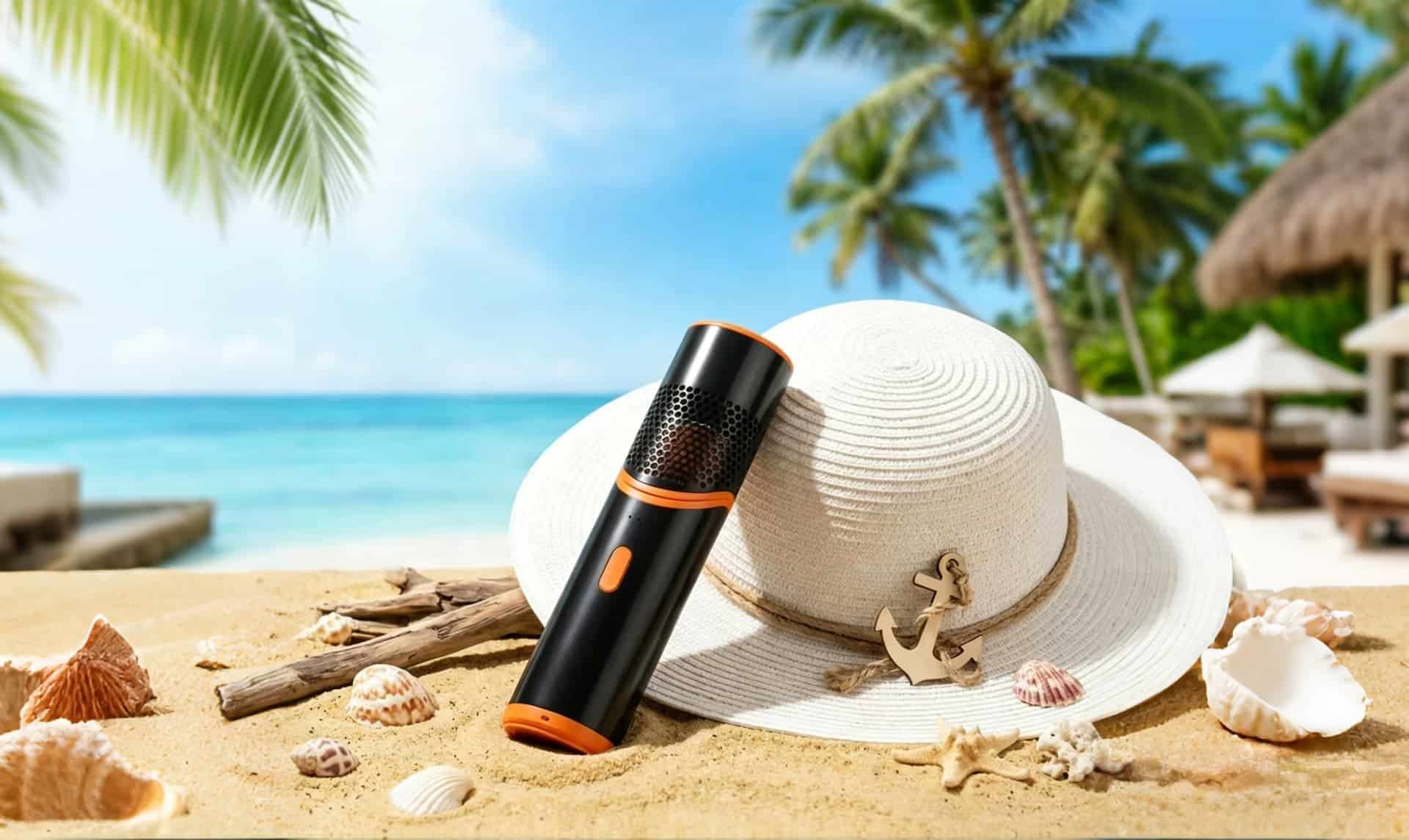
7. Eat Light and Cold
Heavy, hot food raises your internal body temperature and diverts blood flow to digestion, which leaves you feeling sluggish and hotter than you need to be. Save the grilled meals for the evening.
At the beach, stick to light, cold snacks that hydrate as they fuel you. A small cooler is one of the best investments you can make for a full beach day.
| Snack | Why It Works |
|---|---|
| Watermelon or chilled grapes | High water content, easy to digest |
| Cold cucumber slices | Hydrating and virtually weightless |
| Carrot sticks with hummus | Replenishes electrolytes without heaviness |
| Frozen grapes | A natural alternative to ice cream |
| Pineapple chunks | Hydrating with natural enzymes that aid digestion |
| Cold herbal iced tea | Caffeine-free hydration that actually refreshes |
| Ice pops | Quick cool-down, easy to pack |
Avoid fried foods and anything high in protein during peak heat hours — both take longer to digest and generate more internal heat. If you want a proper meal, wait until the temperature drops in the evening.
8. Stay Hydrated — and Stay Smart About It
Food handles some of your hydration, but water still does the heavy lifting. Aim to drink at least 8 ounces every 30 minutes under direct sunlight, even if you don’t feel thirsty yet. Coconut water is a solid alternative — it replaces electrolytes naturally without the sugar crash that sports drinks often bring.
Avoid soda and alcohol. Both accelerate dehydration faster than the sun does. A cold beer might feel refreshing at noon, but it’ll cost you by mid-afternoon.
9. Avoid Peak Sun Hours When Possible
The sun between 10 AM and 4 PM is a different beast. UV radiation is strongest during this window, and ground heat from the sand compounds the effect significantly.
If you can, plan your active beach time around the edges of the day — early morning or late afternoon. During the midday stretch, stay in the shade, read a book, take a nap. You’re not missing the beach; you’re pacing yourself to actually enjoy it all day.
10. Keep Your Feet Off the Hot Sand
Sand temperature on a sunny day can reach 140°F (60°C) or higher — hot enough to cause burns if you walk barefoot for too long. Flip-flops or water shoes are the obvious fix, but a good beach mat also creates a barrier that makes a surprising difference.
Wet your feet regularly, too. It sounds minor, but feet have a high concentration of blood vessels near the surface — cooling them down has an outsized effect on how the rest of your body feels. A quick rinse every hour goes a long way.
Important Reminder
Stay smart, not just cool. Heat exhaustion can sneak up on even experienced beachgoers. Watch for warning signs — dizziness, nausea, or stopping sweating in the heat — and don’t push through them. With the right preparation, though, an all-day beach session is completely doable and genuinely enjoyable.
A great beach day comes down to preparation and pacing. Stay ahead of the heat rather than chasing it, and the sun becomes something to enjoy instead of something to survive.