
The planning always goes the same way. You pick the lineup, sort the tickets, pack the bag, and tell yourself this year you will handle the heat better. Then, early afternoon hits, the crowd fills in, and the sun does what it does in July. The misting station has a queue. The shade dried up when the field got busy. And the set you have been waiting three months for starts in forty minutes.
Staying hydrated matters. Loose clothing helps. But when the air around you stops moving entirely, none of the standard advice gets you through a long afternoon in a dense crowd comfortably. A handheld fan does. It is personal, immediate, and it works wherever you are standing — front row, back of the field, in the food queue, or waiting out the gap between acts in full sun.
Why Festival Heat Is Different From Any Other Kind
It’s worth being clear about this upfront, because it determines what kind of solution actually helps.
The Heat Comes From Every Direction
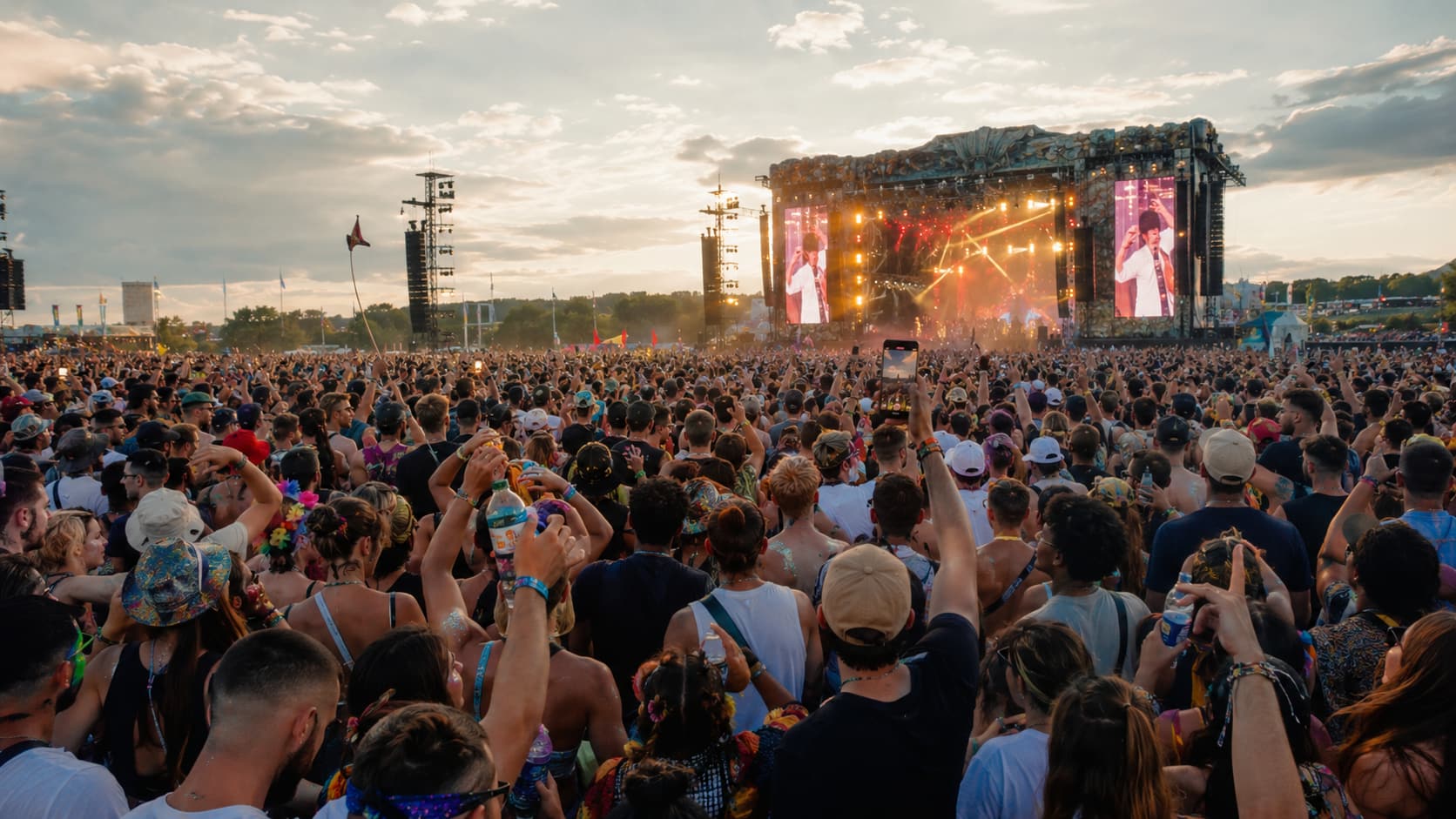
At a festival, heat doesn’t come from one source. The sun pushes down from above. The crowd around you radiates warmth outward. The ground reflects it. In a packed field at peak afternoon, the air between people stops moving the way it does in open space. It just sits there.
This is why standard advice — find shade, drink water, wear loose clothing — works in ordinary heat but falls short here. It addresses one source. Festival heat is all of them at once.
Why a Handheld Pocket Fan Works When Everything Else Doesn’t
At home or in an office, overheating is temporary. You move somewhere cooler, you open a window, you step outside for a minute. A festival doesn’t give you that option. You’ve claimed your spot in the crowd through an hour of waiting, and walking away to find shade means watching the set from behind someone else’s shoulder.
A handheld fan solves this in a way nothing else does. It brings the cooling to where you’re standing, without requiring you to go anywhere. That’s not a small thing. It’s the whole thing.
What Makes a Handheld Fan Worth Bringing
Festival bags fill up fast. A handheld fan needs to earn its space. Three things determine whether it does.
Airflow Strong Enough to Cut Through Crowd Heat
The problem with weak fans isn’t that they produce no airflow — it’s that the airflow disappears before it reaches your face. That’s manageable indoors. In a dense crowd, in outdoor heat, you need output that actually reaches you at arm’s length: roughly 4 to 6 metres per second at the fan head, where the experience shifts from marginal to genuinely effective.
Below that, you’re holding something to hold. You’re not cooling down.
Battery Life That Covers the Whole Day
A festival isn’t a two-hour event. From mid-afternoon arrival to late-night exit, you’re looking at twelve hours, easily. Recharging mid-day is mostly theoretical — charging points have queues, and finding one means leaving your spot.
What you need isn’t a fan that lasts a few hours. You need one that you charge the night before and don’t think about again: high speed for the worst of the afternoon, low speed between sets, and still enough left by the time the headliner finishes.
A Handheld Fan Small Enough to Stop Noticing
Anything over 200 grams starts to feel heavy after a while. Anything too wide won’t fit in a jeans pocket, which means you’re carrying it in your hand every time you move — and it quickly becomes something you’re managing rather than something you just have.
The practical threshold is under 200 grams and no wider than a large marker pen. At that size, it disappears into a side pocket, and you stop registering it’s there — until you need it.
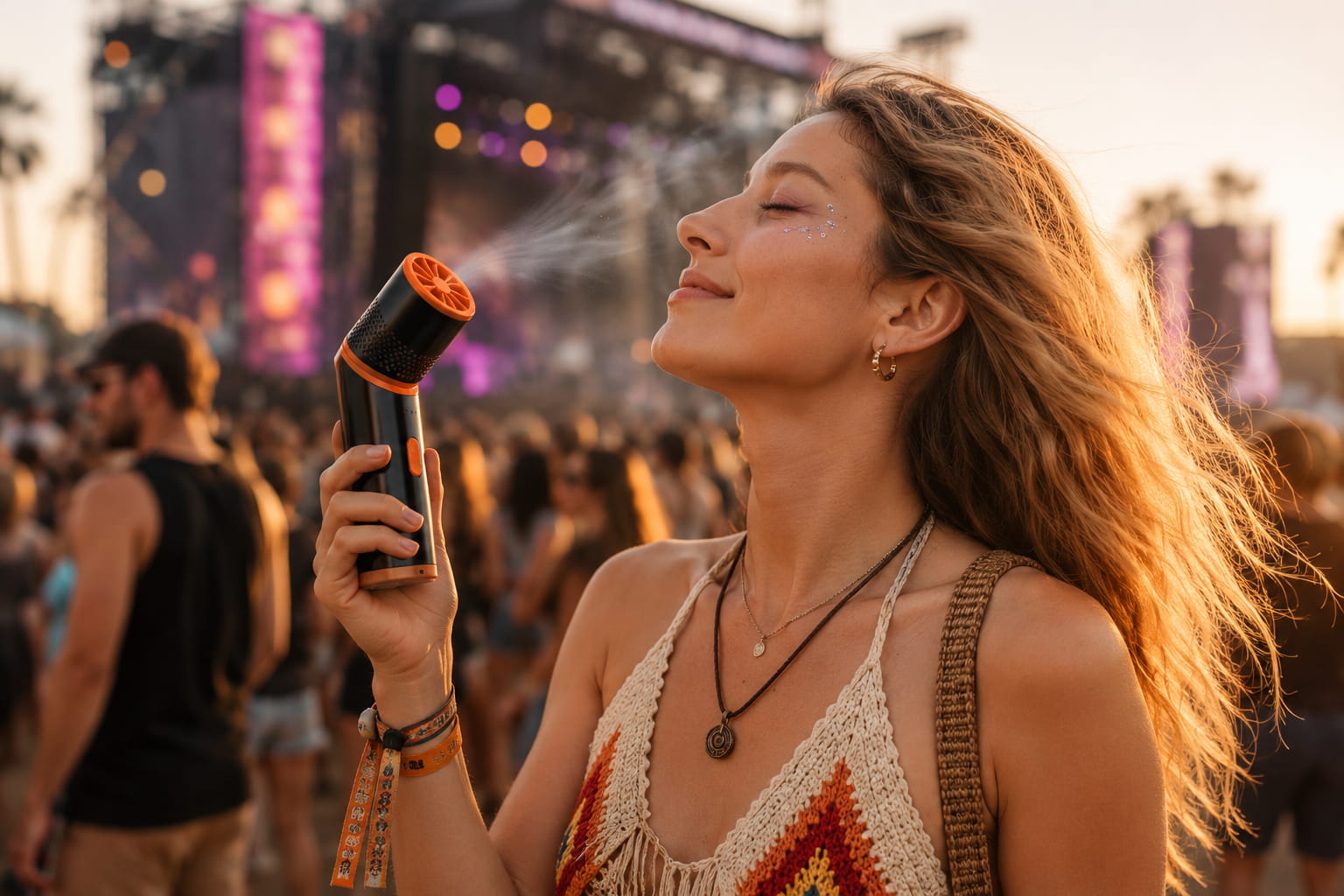
The WindBillion Windmini — A Handheld Fan Built for Full Days Out
We brought the WindBillion Windmini Fan to an actual festival day. Here’s an honest account of how it held up.
Real Airflow in a Crowd
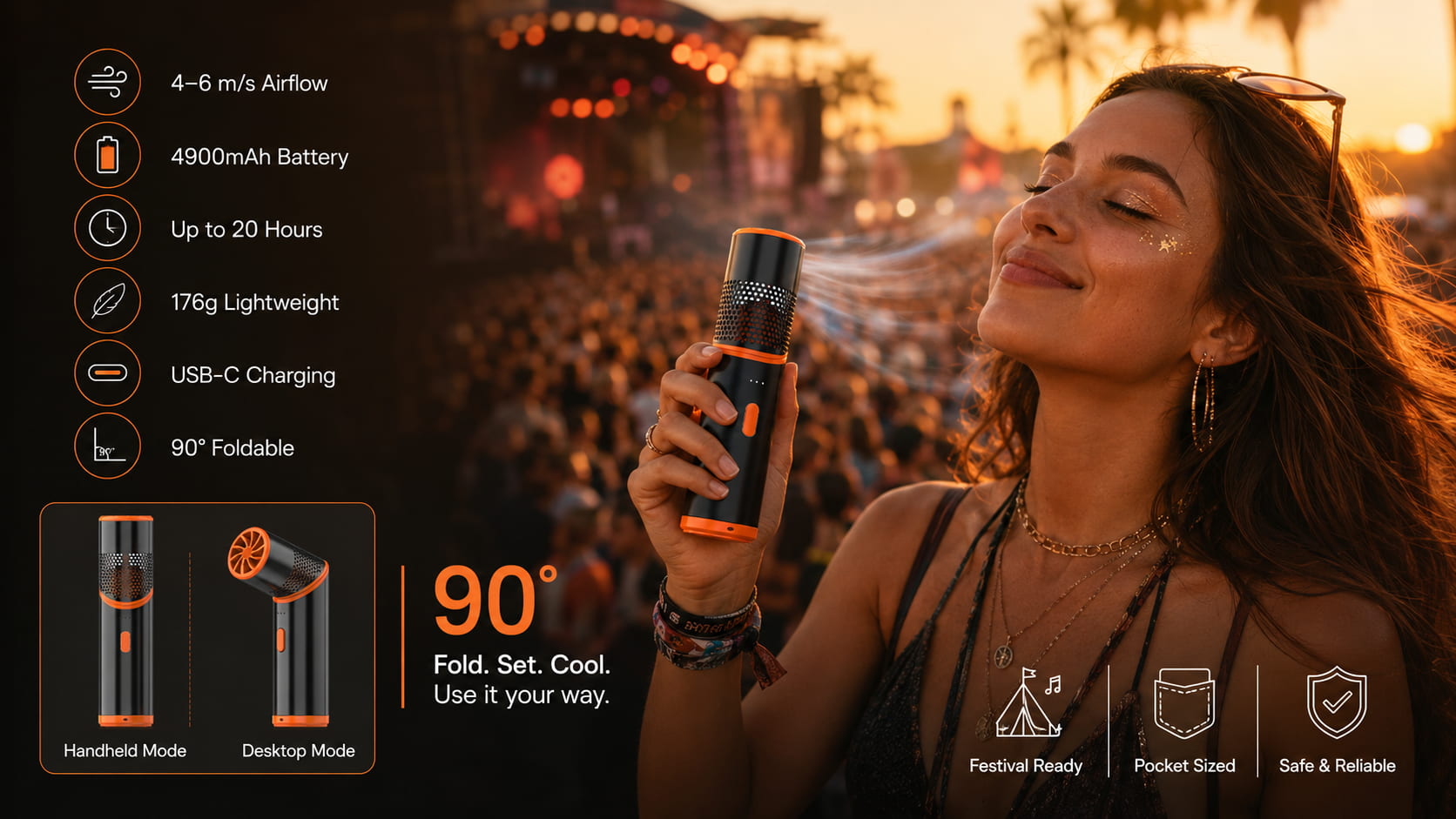
A brushless motor at 15,000 to 18,000 RPM produces wind speeds of 4 to 6 m/s at the fan head. Pointed at your face in a packed crowd, the difference is immediate and real — not a vague sensation of movement, but the kind of cooling that makes you visibly relax.
This is where a lot of small fans fall short. They’re light and easy to carry, but underpowered when the heat is actually pressing in. The Windmini is sized for performance, not just portability.
All-Day Battery With USB-C Charging
4,900mAh gives a runtime of 6 hours on high and up to 20 hours on low. In practice, high during the hottest stretch of the afternoon, low in between — a single charge handles the whole day with room left over. When it does need recharging, USB-C brings it back to full in 3 to 5 hours using the same cable as your phone.
176g and Slim Enough to Forget About
At 176 grams and 156×38mm, it fits in a jeans pocket without bulk, and in any side pouch without competing for space. After a while, you genuinely stop noticing it’s there — until you’re hot again and reach for it.
The build holds up to the handling a long day actually involves: pulled in and out of bags repeatedly, held for stretches in a warm hand, and knocked around without careful treatment.
One Fan That Covers the Whole Day
The 90-degree adjustable head folds into a desktop stand, so at the campsite or between acts, you can set it down and let it run without holding it. One fan, the whole day, no adjustments beyond the fold.
One honest caveat: it occupies a hand. When you’re filming or cheering with both arms, it has to go away first. That’s not unique to this fan — it’s the trade-off every handheld fan asks you to make. Think through whether your hands will be free in the moments you’ll need them most.
How a Handheld Fan Changes the Rhythm of a Festival Day
A good fan doesn’t just make you cooler. It changes how much attention you spend managing heat — and how much you have left for everything else.
During a Set: Where a Handheld Fan Earns Its Place
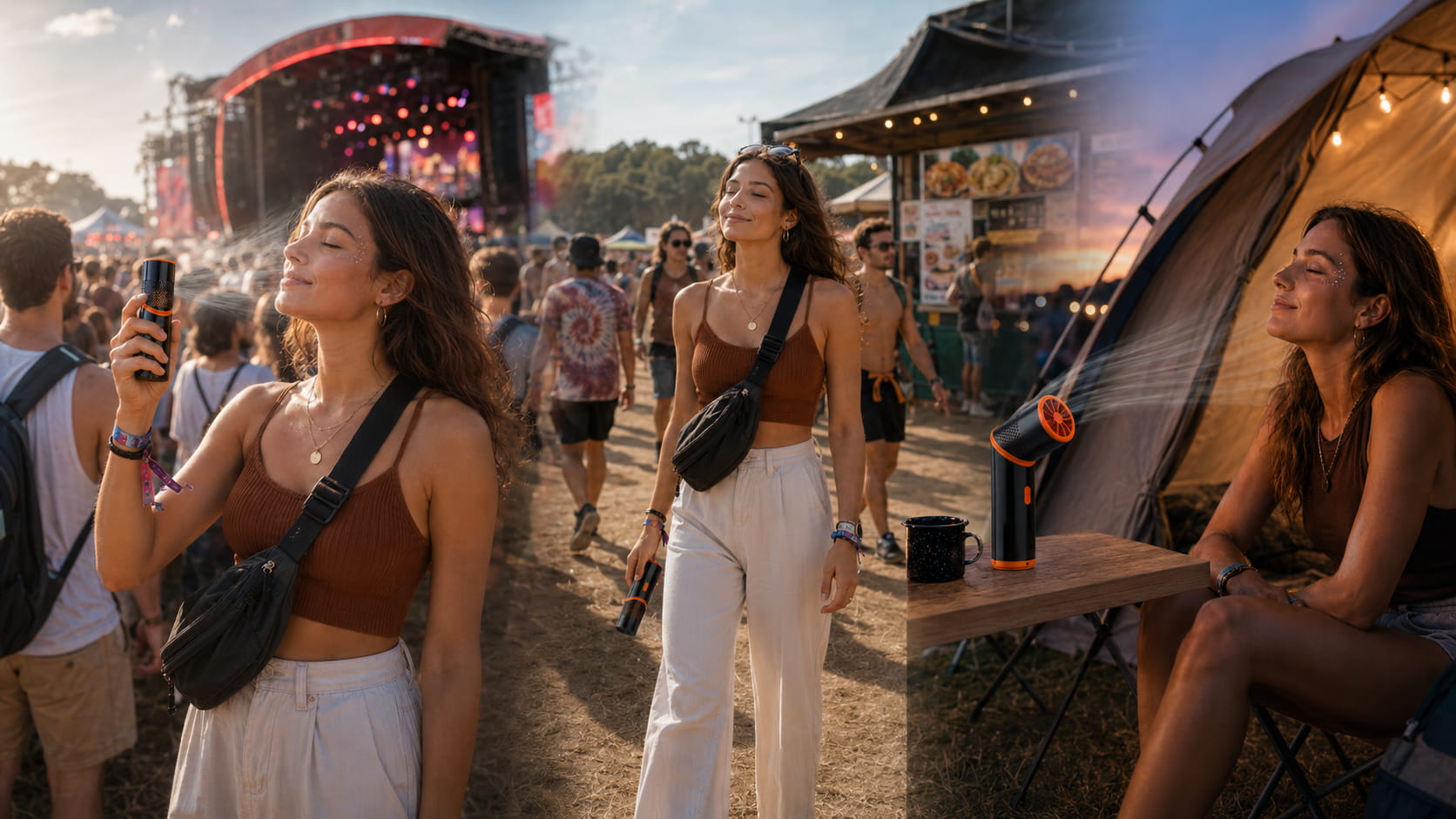
Standing still in a dense crowd under the afternoon sun is the most physically demanding part of the day. With the Windmini at high speed, it shifts from something to endure into something that’s genuinely comfortable. You stay cooler, you stay present, and you stop counting down to when the set ends, and you can find some space to breathe.
Between Stages
The walks between stages, the food queues, the open stretches of field between acts — these are the moments that wear people down gradually. Slip it into a pocket while moving, pull it out when you stop. One button adjusts the speed. The whole thing takes less thought than unlocking a phone.
Back at Camp
Tents trap heat. After a long day in full sun, settling into a warm tent with no airflow is the detail that makes festival camping harder than it needs to be. The Windmini on low runs quietly, draws almost no power, and creates just enough movement to make a small enclosed space feel different. The battery barely registers the overnight use.
The Simplest Way to Stay Cool at a Festival
Most strategies for handling festival heat depend on conditions you can’t control — where the shade falls, how close the misting station is, and whether there’s a breeze. A handheld fan is the one cooling option that travels with you and works regardless of where you’re standing.
If you’re on the fence, think back to the hottest afternoon of the last festival you went to. If you are fine, you probably don’t need one. If you spent that stretch counting down to when it would end, a capable handheld fan will make this year different.
The WindBillion Windmini Fan is the one we think gets the balance right between portability and real-world output. It’s not the only option. But if you want a concrete starting point rather than a longer search, this is a reasonable one.